Ministerial Direction 119, 121 and 122: How Skilled Visa Processing Priorities Changed After We Lodged
We lodged our 491 visa application on 11 May. After that came the health checks, and then the waiting. On 25 July, a phrase I had never heard before started appearing in every migration forum and agent newsletter: Ministerial Direction 119, or MD 119. Then, less than two months later, it was replaced again. If you have lodged a skilled visa application, or you are about to, this is worth understanding, so here is what I learned.
I am not a migration agent, and nothing here is advice. I have tried to stick to what the Department of Home Affairs says on its own skilled visa processing priorities page, and to be clear about what I do not know.
What a Ministerial Direction Is
The Department does not necessarily process applications in the order it received them. For many skilled visas, the government sets policy priorities, which the Department follows when deciding which applications to consider first. These are issued as Ministerial Directions, and each one is numbered. A newer direction can replace an older one, which changes how applications are ordered without any change to the visa rules or to your own application.
That last point is the important one. A priority direction affects the order in which applications are processed. It does not change whether you are eligible, and it is not a decision on your case.
What Happened, and When
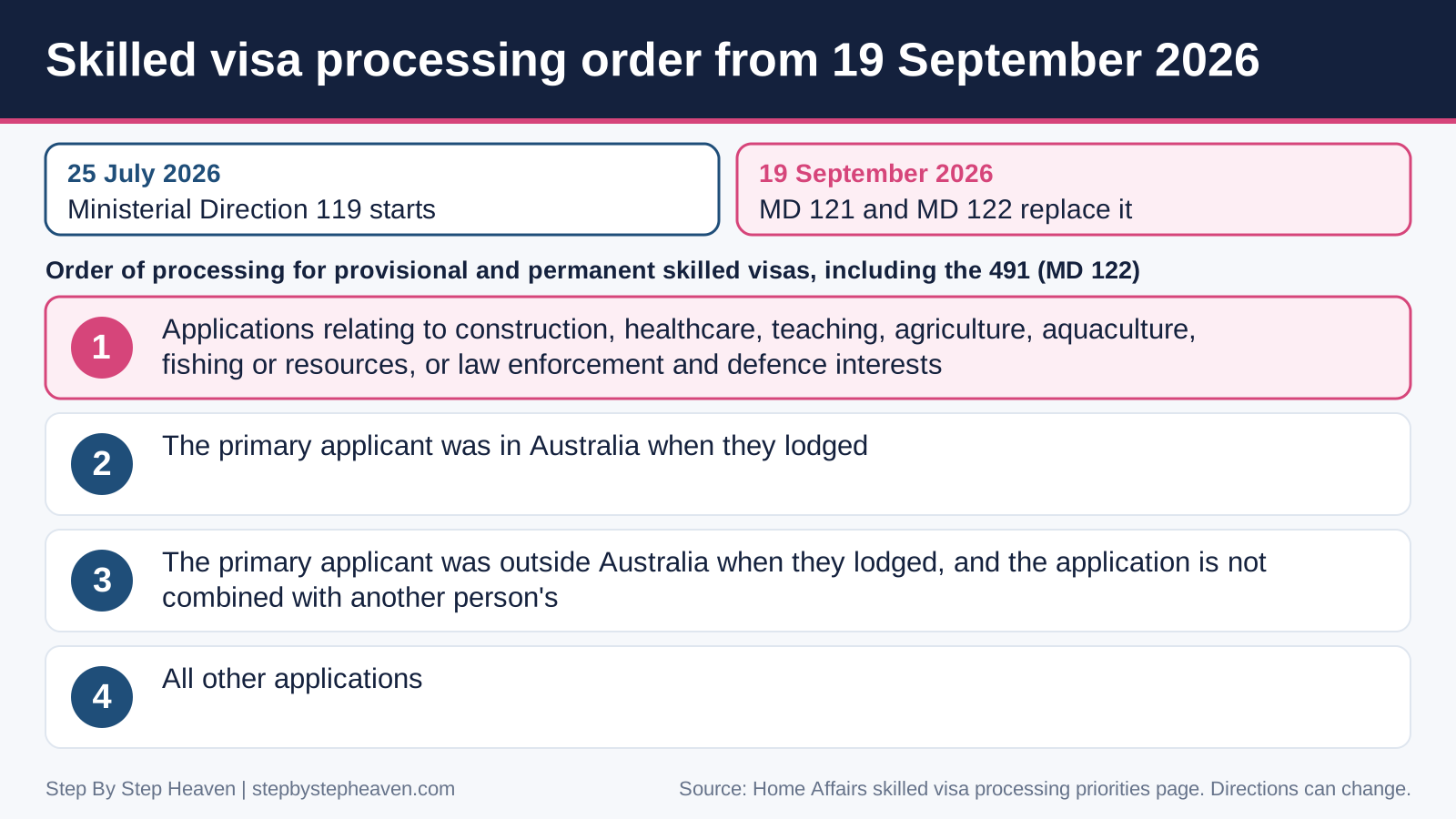
- 25 July 2026: MD 119 began. It set a new order for processing certain skilled nomination and visa applications, and it is the one I first heard about.
- 19 September 2026: Ministerial Directions 121 and 122 came into effect. According to the Department, they replaced all processing priorities under MD 119.
So the order changed twice in a matter of weeks. If you read an article about MD 119, check whether it is still current before you rely on it.
Which Direction Covers Which Visa
The Department’s page splits them into two:
- MD 121 covers temporary skilled visas (the Skills in Demand subclass 482).
- MD 122 covers certain provisional and permanent skilled visas: subclasses 186, 187, 189, 190, 191, 489, 491, 494, 887 and 888.
For those of us on the 491, MD 122 is the one that matters.
The Order of Processing Under MD 122
The Department lists this order of priority for MD 122:
- Visa applications relating to construction, healthcare, teaching, agriculture, aquaculture, fishing and resources sectors, or Australia’s law enforcement and defence interests.
- Visa applications where the applicant was in Australia at the time they lodged.
- Visa applications where the primary applicant was outside Australia at the time they lodged, and whose application is not combined with another person’s application at any time.
- All other visa applications.
Two things decide where an application sits: the sector it relates to, and whether the primary applicant was in Australia or outside it when they lodged.
What It Meant for Us
Before MD 119, we had been told that the 491 sat in the top priority group, and that a fast case could take roughly three to six months. When MD 119 was announced on 25 July, the way it was explained to us, and the way migration advisers summarised it, was that applicants who lodged from outside Australia had been pushed down to the fifth and last priority group. Onshore applicants, on the other hand, seemed to be prioritised. For an offshore application like ours, that sounded like a much longer wait.
Then the direction changed again. My husband is the primary applicant, and his occupation is in construction (drywall and plastering). We lodged from Canada, so we were outside Australia. Reading the current MD 122 list above, the first group is sector-based, so on the face of it, applications relating to construction appear in the top group regardless of where the applicant was when they lodged. That is quite different from how MD 119 was described to us. I only noticed it when I read the Department’s page for this post, so if you are in a similar position, do not assume the old summaries still apply.
I want to be careful here. I do not know exactly how the Department classifies a particular occupation or application under these headings, and I do not know how the wording about applications being “combined with another person’s” applies to a family lodged together. I read that line closely because we applied as a family, and I am not certain what it covers. Ask your migration agent, or the Department, how the direction applies to your own case rather than relying on my reading, or anyone else’s.
Why This Is Emotionally Strange
After months of nonstop preparation (English tests, police certificates, nomination, the portal), waiting is hard. Then a new rule appears that might move you up or down a queue you cannot see, and there is nothing you can do about it. The best I have found is to treat it as information, not an event. It does not change what you have done, and it does not change what you can control.
I will be honest about our own feelings, too. When MD 119 seemed to push offshore applicants to the back of the line, I felt a sting. But we also have a home here in Canada, and we needed time to prepare for a move anyway, so a slower queue is manageable for us. I know that is not true for everyone. If you have a lease ending, a job offer with a start date or a child’s school year to plan around, a longer wait can change a lot, and it is worth talking through with your agent.
What You Can Actually Do
- Read the Department’s page yourself. It is the only reliable source, and it states the current direction and the date it came into effect.
- Check that any article you read is current. Directions have been replaced in weeks, not years.
- Keep your application healthy. Respond to requests for information on time, and check your ImmiAccount and your email regularly.
- Keep your own documents valid. Passports, police certificates, health exams and other time-limited items can expire while you wait.
- Use the processing-times guide as a rough indication only. It shows recently decided applications and is not specific to your case.
- Ask your agent. If you have one, this is exactly the kind of question they are for.
- Live your life. Keep working, keep saving, and do not put everything on hold.
The Bottom Line
Processing priorities are one more moving part in a system that already moves a lot. They decide the order, not the outcome, and they can change quickly. If you lodged your 491 before July, as we did, you may now sit under different rules than the ones you lodged under, so check the official page and ask for advice on your own case. I will update this post if anything changes for us.
This is my own understanding of a government policy and is not immigration advice. Ministerial Directions change, so always confirm the current order of processing on the Department of Home Affairs website or with a registered migration agent. See also our timeline.