What Happens After Submitting a 491 EOI?
Submitting an Expression of Interest feels like a milestone. Then, almost immediately, the silence sets in. Nobody really explains what is happening during the wait, or what, if anything, you are supposed to be doing while it happens. This is what we learned about that stretch of time.
Our own experience was unusual, so I want to be upfront about it. My husband is the primary applicant, in construction (drywall and plastering), and I am the partner. Invitation rounds for his occupation were running when we started, and our wait was measured in days, not months. We submitted our EOI on 16 March, selecting Queensland, Western Australia and Victoria. Queensland came back on 20 March, four days later. We submitted our nomination application on 30 March, and around 10 April the nomination came through. (I do not remember whether the invitation to apply for the visa arrived the same day.)
That is not typical, and I would not plan around it. Wait times vary enormously by occupation, points and state. What I can offer is what is true for anyone, and how to use the gap wisely, because even our short wait was full of things to do.
What an EOI Actually Is (and Isn’t)
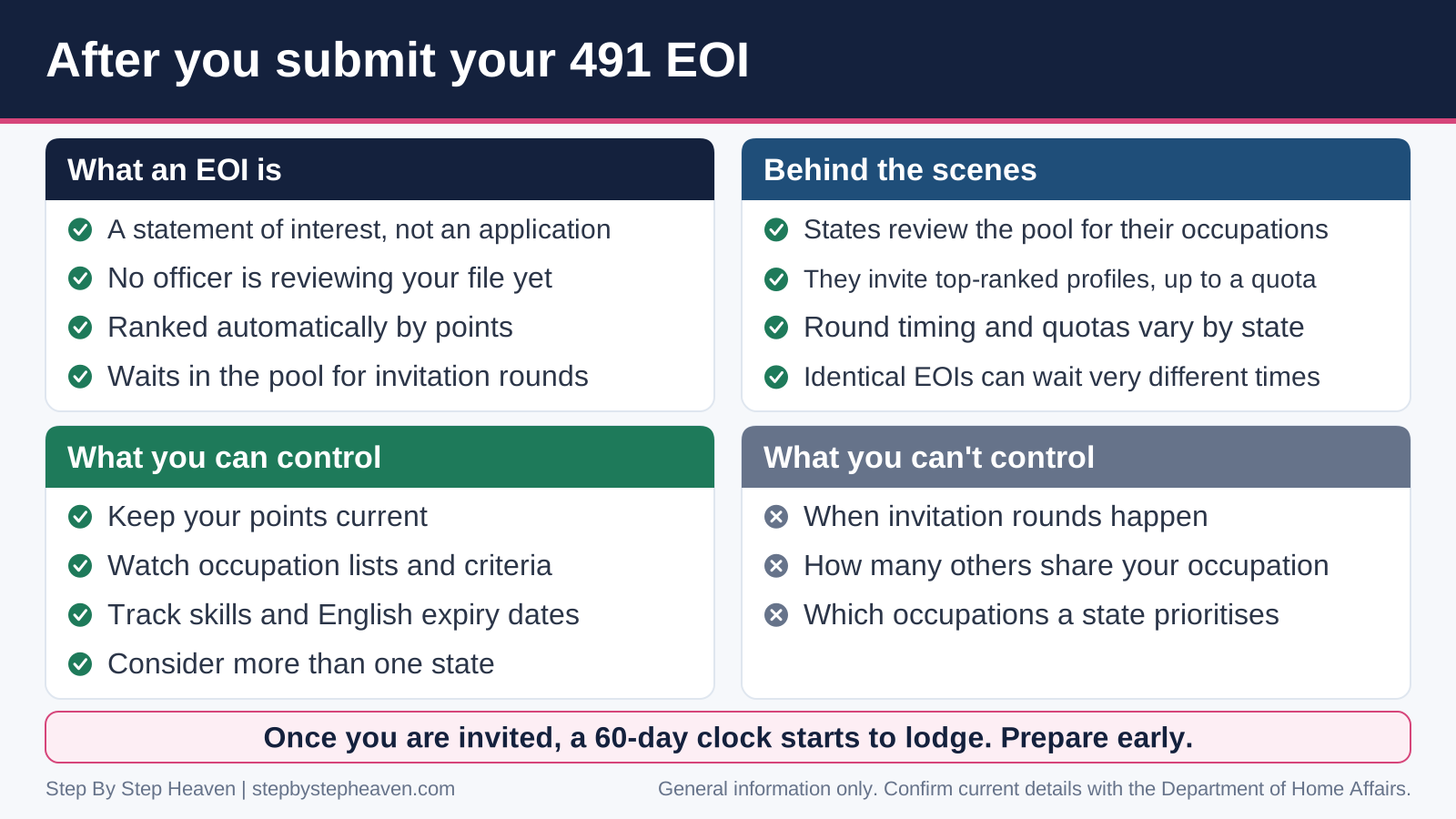
An EOI submitted through SkillSelect is not an application. It is a statement that you are interested in being considered, ranked against everyone else with your occupation based on points. It does not get “processed” in the way a full visa application does. Instead, it sits in a pool and is automatically compared against other EOIs whenever a state or territory runs an invitation round for your occupation.
This distinction explains why nothing seems to happen for a while: no officer is reviewing your file yet. You are waiting for an invitation round, not for a decision on an application.
What Is Happening Behind the Scenes
Each state and territory periodically reviews EOIs in the pool for occupations on their current list and sends invitations to the highest-ranked profiles, up to whatever quota they have set for that round. How often these rounds happen, and how many invitations go out, varies by state and by how much demand there is for an occupation. That is exactly why identical EOIs can wait very different lengths of time depending on which states they are targeting.
What You Can Control While Waiting
Keep your points current. If anything changes (you pass a higher English band, gain more work experience, complete another qualification), update your EOI immediately. An outdated EOI with fewer points than you actually have is a self-inflicted disadvantage. In our case, English was central. I needed Competent English to add 5 partner points, and it took me three tests. I explain that in my English score post.
Watch for changes to occupation lists and criteria. States periodically update their occupation lists and nomination requirements. An occupation that was not eligible six months ago might be added, or new requirements might appear. Checking in periodically is worth the ten minutes it takes.
Consider more than one state. Unless something ties you to one specific state, keeping options open across multiple eligible states can shorten the wait, because you are not depending on a single state’s rounds. We selected three states on our EOI, and the first to respond was the one that moved us forward. See how to choose a state.
Keep your documents from going stale. If your skills assessment or English test has an expiry date, and your invitation arrives right as it is about to lapse, you could be forced to redo it under time pressure. Track expiry dates against realistic wait times, not just the date you hope to be invited.
Start the slow documents now. This is where the wait pays for itself. Overseas police certificates can take months. Mine, from Japan, took about ten weeks, while the Canadian one took about two weeks. Certified translations and reference letters also take time. Everything you finish during the wait is time you will not need to find inside the 60-day window later.
What You Cannot Control (and Should Not Stress About)
The exact timing of invitation rounds. These are set by each state based on their own quotas and priorities, not on anything an individual applicant does.
How many other people are in the pool for your occupation. Competition shifts constantly as new EOIs are submitted and others expire or are invited.
Whether your occupation is prioritised in a given round. States adjust priorities based on their own labour market needs, and that is entirely outside any individual applicant’s hands.
Worrying about these three things does not change the outcome. It just adds stress to a process that is already slow. The better place for that energy is the list above.
How Long Is “Normal” to Wait?
There is no single fixed number, and I am wary of quoting one as if it applies to everyone. Wait times vary a lot by occupation, points score and the states you have targeted. Treat the process as something to plan your life around in the background, not something to put your life on hold for. Keep working, keep saving, keep your documents current, and let the invitation arrive when it arrives.
What Happens Once You Are Invited
Once invited, the 60-day clock to lodge your full application starts. This is a completely different phase from the EOI wait, and worth preparing for in advance rather than starting document-gathering from scratch at that point. A useful test: if your invitation arrived tomorrow, could you lodge in 60 days? If the answer depends on a certificate that takes months, start now.
A Practical Checklist for the Waiting Period
If I had to put the wait on one page, it would look like this:
- Every month: check your state’s nomination page for changes to occupation lists, points thresholds or requirements, and log in to SkillSelect to confirm your EOI is still active.
- Every few months: recalculate your points, and check that your skills assessment and English results are still inside their validity window.
- Once: apply for any police certificate that takes months, order certified translations and ask former employers for reference letters that state your duties, dates and hours.
- Once: create a single folder for everything, with consistent file names, so that the 60-day window is spent uploading rather than searching.
- Always: keep enough savings and flexibility that an invitation arriving at an inconvenient time does not derail you.
None of this is glamorous, but it turns dead time into progress.
The Bottom Line
The EOI stage is less about doing something and more about staying ready while something happens on the other end. Keep your points and documents current, stay open to multiple states if you can, and put your energy into the parts of the process you control. For us, that meant using every week before lodging. My full sequence is in my month-by-month timeline.
This reflects my own experience and research and is not immigration advice. SkillSelect processes and state criteria change over time, so always confirm current details with the Department of Home Affairs and your state nomination authority.