Still Waiting: Our 491 Visa 4 Months After Lodging
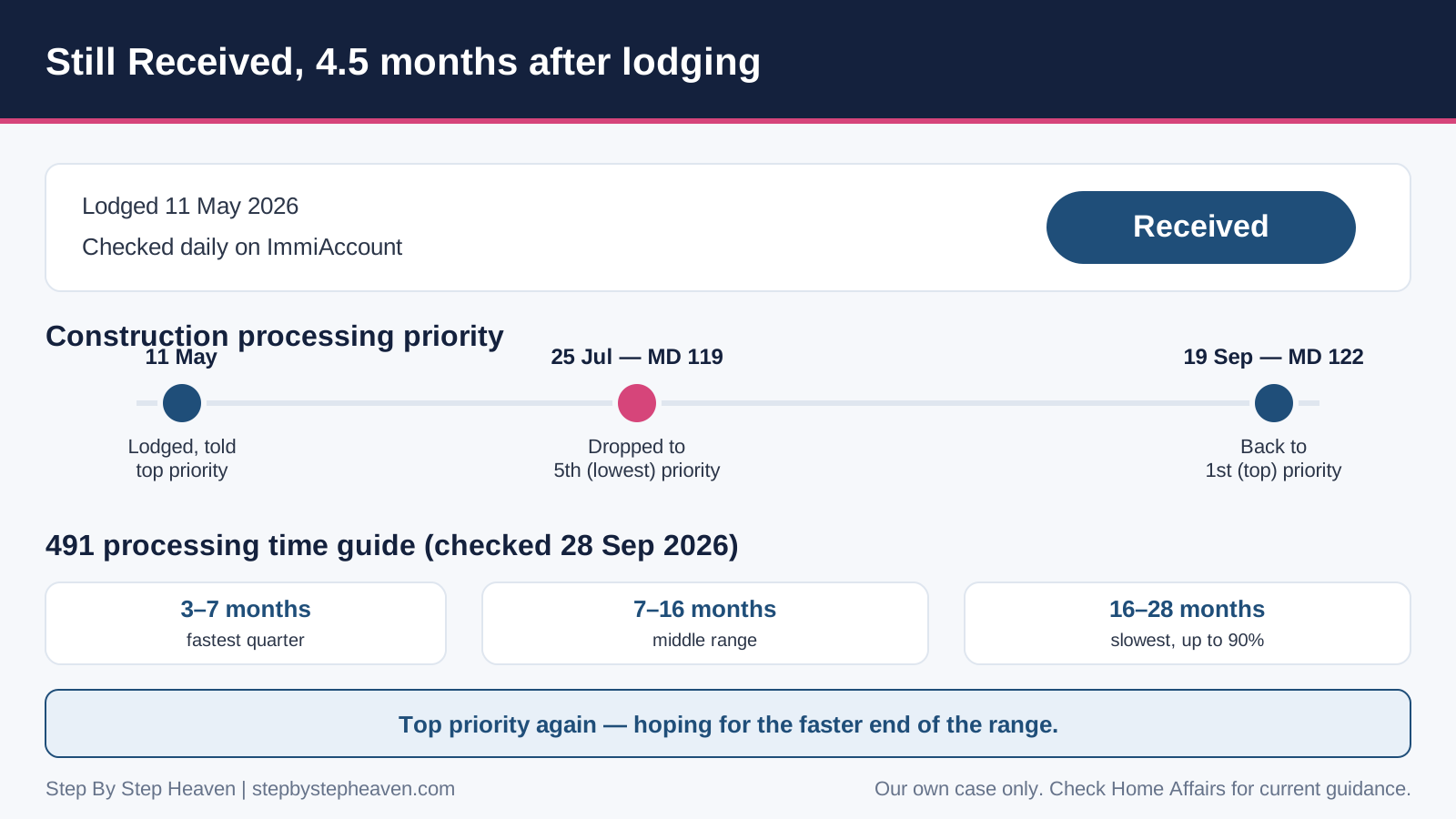
We lodged our 491 visa application on 11 May. It is now 28 September, more than four and a half months later, and ImmiAccount still shows the same word it has shown since the day we lodged: Received. No case officer has contacted us. Nothing has changed on the screen.
I wanted to write this update honestly, including the parts that were hard, because most things I read about this stage are either official guidance or success stories after the fact. This is what the middle actually looks like.
I am not a migration agent, and this is just our own experience. If you want the background on the rule changes I mention here, I wrote about them in more detail in our Ministerial Direction post, and the full sequence up to lodging is in our month-by-month timeline.
Where Things Stand Today
- I check ImmiAccount every single day. It still says Received.
- No request for more information, no contact from a case officer, nothing.
- Under Ministerial Direction 122, which took effect on 19 September, construction moved to the top processing priority group for our visa subclass. I have not seen any real change in our account since then, and I do not expect one overnight.
Checking every day probably does not change anything. I do it anyway. I think that is normal.
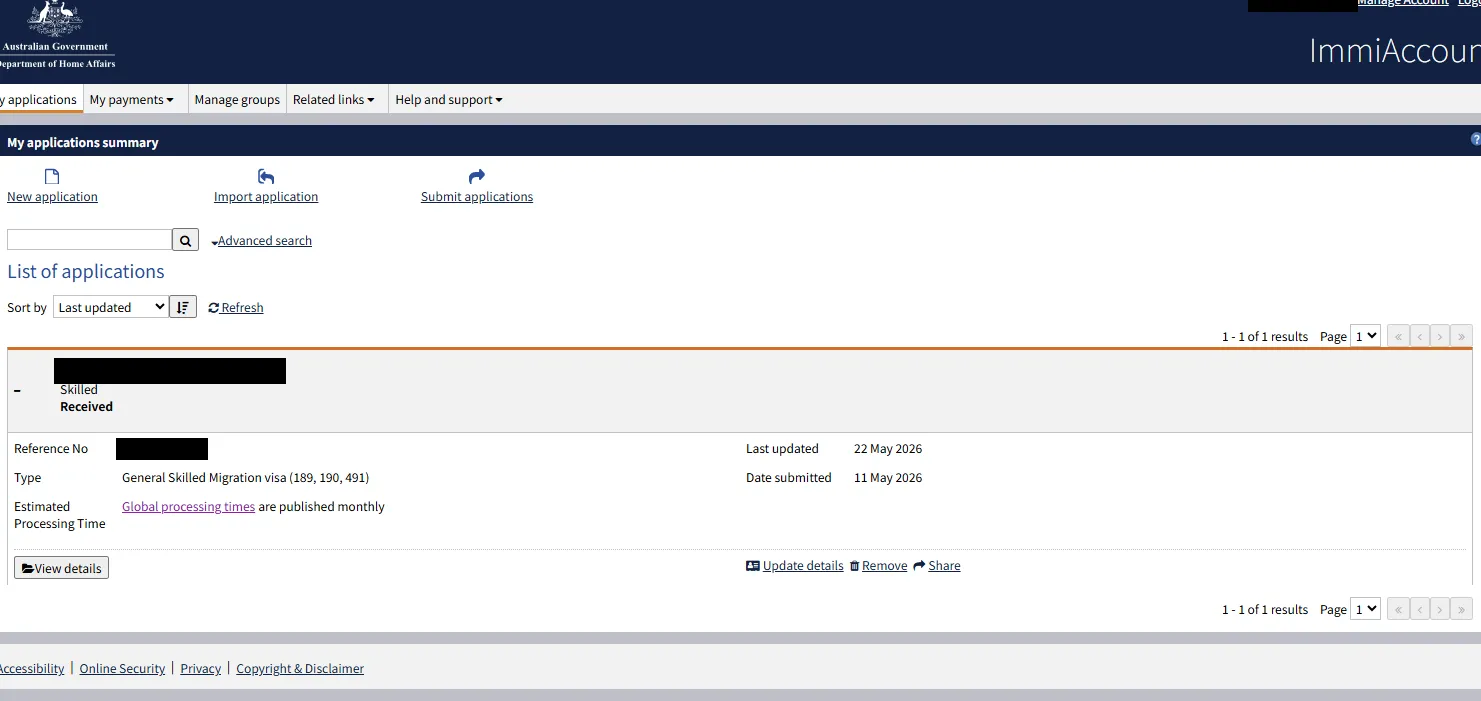
What I see every day: the status is still “Received”. Names, birth date and reference number are covered.
The Hardest Moment: 25 July
The hardest point in this whole wait was not lodging, and it was not the paperwork. It was 25 July, when Ministerial Direction 119 came into effect.
Before MD 119, we had been told construction was in the highest priority group, and that a case like ours might be decided in three to six months. Then, about two and a half months after we lodged, MD 119 dropped offshore construction applicants like us down to the lowest, fifth priority group. Suddenly people in forums were talking about waits of up to two years instead of months.
That hit hard. We are not young, and our son is already past the age most children start school. A jump from “maybe six months” to “maybe two years” felt like it changed everything about our plans, and there was nothing we could do to influence it either way.
The Turn: 19 September
Less than two months after MD 119, it was replaced by Ministerial Directions 121 and 122. Under MD 122, construction jumped from the bottom priority group back to the very top.
I will not pretend I know exactly what this means for our timeline. What I can say is how I am reasoning about it. Home Affairs publishes a processing times guide for the 491, and when I checked it, it showed roughly this shape: the fastest quarter of applications decided in about three to seven months, the middle range stretching from around seven to sixteen months, and the slowest, up to ninety percent, taking sixteen to twenty-eight months. Since our occupation is now in the top priority group again, I am hoping we land closer to the faster end of that range, maybe by early next year. That is a guess, not a promise, and these figures change, so check the guide yourself for your own subclass and dates on the Department of Home Affairs website.
Turning “Lost Time” Into Time We Needed Anyway
Once the shock of MD 119 wore off, I tried to change how I thought about the wait. If it really did mean up to two years instead of months, I decided to treat that as time we had been handed rather than time we had lost.
That reframing has actually been useful. We are slowly working through things at home rather than rushing, looking into the right timing for a few bigger decisions instead of forcing them under pressure, and generally allowing ourselves to prepare properly instead of scrambling. I will write more about the practical side of that separately once we have actually made those decisions. For now, the honest version is: we are using the extra runway.
What We Are Actually Doing While We Wait
- Checking ImmiAccount daily, even though I know it rarely changes.
- Following Australian migration communities and forums, partly for information and partly, I will admit, for reassurance.
- Slowly sorting through our belongings, thinking ahead to an eventual move rather than doing it all at once.
- Working and parenting exactly as normal. I made a deliberate choice not to put life on hold. We go to work, we look after our son, we live day to day rather than waiting for a specific date.
- Writing this blog. Honestly, this has helped more than I expected. Writing each step down, in order, with real dates, turned a blur of stress into something I can actually look back on and understand. When I reread the earlier posts, I can see exactly what I was feeling at each point, not just what happened.
What Comes After Approval
We applied from outside Australia, which means we are free to wait wherever we are, not tied to Australia while the decision is pending. Once the visa is approved, our plan is to first spend around three months visiting family overseas, since we will not get an easy chance to do that once we are settled and working in Australia. After that, we plan to move to Australia and start properly.
What I Would Tell Someone in This Stage Right Now
It will come. Prepare well, and try to let yourself actually live through the waiting instead of just enduring it, because this stretch of time will end and become part of the story, the same way every stage before it did. That is the whole idea behind this blog’s name: step by step, toward a life that already feels a little like heaven, even before we arrive.
Where to Go Next
If you are earlier in the process, how our EOI turned into a nomination covers the wait before nomination, and our Ministerial Direction post explains the priority system this update refers to in more detail.
This reflects our own situation and understanding as of 28 September 2026. Ministerial Directions and processing times change, so always confirm current details on the Department of Home Affairs website or with a registered migration agent. I will keep updating this as our own case moves.