Studying for English Tests While Working Full-Time and Parenting
Between late 2025 and March, my husband and I were both studying for English tests, on top of full-time work and raising our son, who was not yet in school. I wrote about the tests themselves in IELTS vs PTE for partner points. This post is about the part that post did not cover: what an actual day looked like, how we split things between us, and the night I seriously asked myself whether any of this was worth it.
The Routine, Most Days
This covers the stretch before my first English test, which I sat in late November, through the following months while my husband and I were both preparing for our own tests.
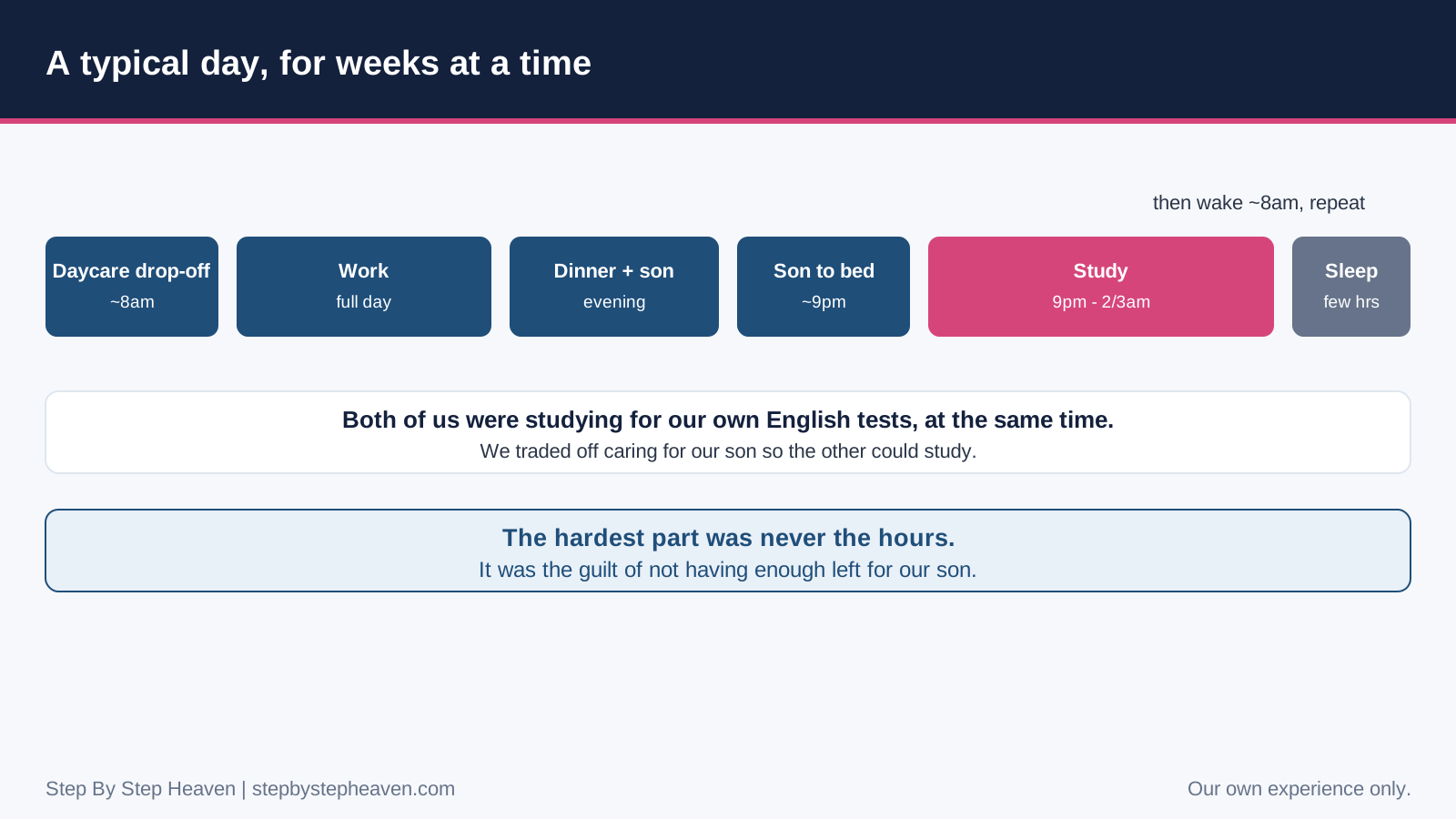
Our son was in daycare at the time, before he started Junior Kindergarten this September. A typical day went roughly like this:
- Drop our son off at daycare, then go to work.
- Work a full day, then pick him up.
- Get home, cook dinner, eat as a family.
- Spend time with our son, then get him to bed.
- Study. For me, this generally ran from around 9pm to two or three in the morning.
- Sleep for a few hours, then wake around 8am and start again.
That was the shape of most days for weeks at a time.
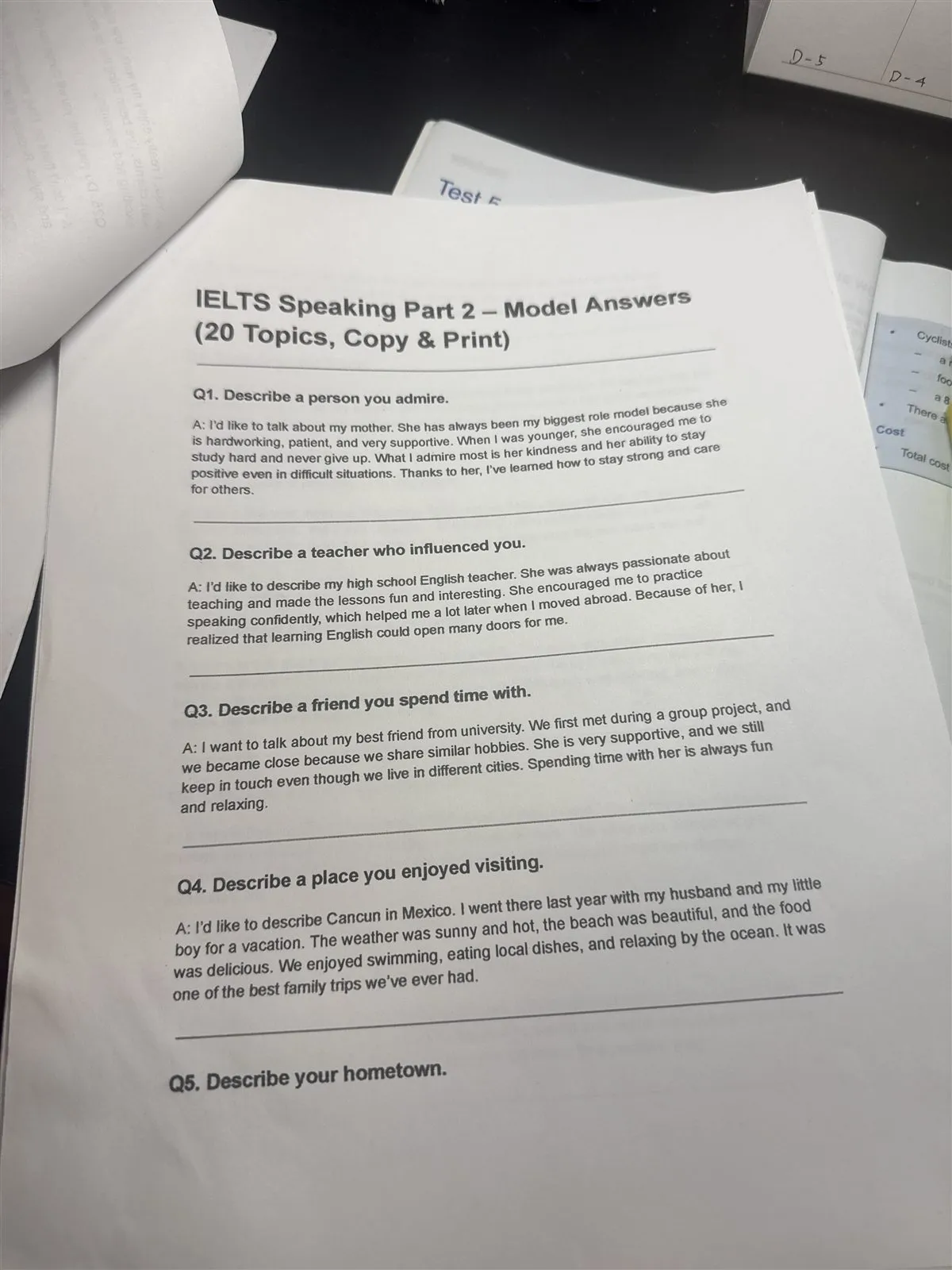
Some of the printed practice material that covered my desk during those weeks.
What I Actually Studied
My study time was not spread evenly. PTE has many different task types across its sections, so I could not drill everything every night. I started with the ones I understood to carry the most points, and kept coming back to them. For speaking, that meant Repeat Sentence (RS), which I practised constantly. For writing, it meant the essay task (WE) and similar high-value items.
After my first PTE sitting on 27 February, I studied much more. That first sitting showed me how the exam is actually set out. After it, I spent time researching how to study for it, and then I studied properly. The second sitting, 11 days later, is the one I passed. I tell the full story in IELTS vs PTE for partner points.
How It Fit the Calendar
| When | What happened |
|---|---|
| Late November | My first IELTS, result on 5 December |
| 27 February | First PTE sitting |
| 10 March | Second PTE sitting, passed with a score of about 65 |
| 16 March | We submitted the EOI |
We Were Both Studying, at the Same Time
Something I have not mentioned elsewhere on this blog: my husband was preparing for his own English test during this same period, not just supporting mine. Both of us needed to study, both of us were working full days, and we had one small child between us. Looking back, I do not know how we managed it, but we found a rhythm.
We split the evening so that whoever was not actively studying was looking after our son: feeding him, bathing him, getting him settled. We traded off. Because my husband had to leave early for work, he tended to go to bed earlier and put our son to sleep, while I stayed up later to study once the house was quiet. On the chores side, I generally handled cooking and cleaning, while my husband took on a larger share of actually being with our son.
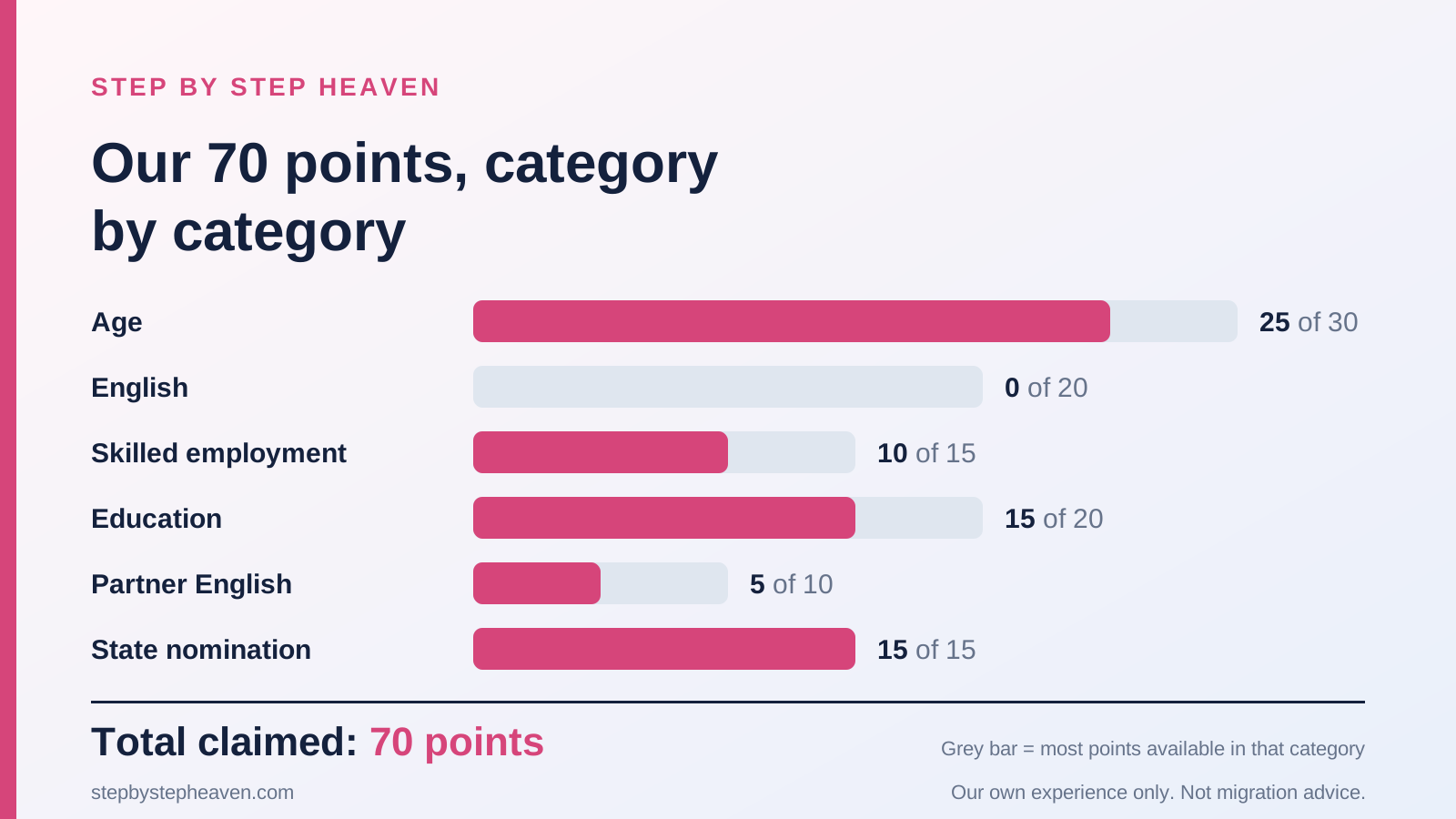
My husband sat the IELTS twice and the PTE once. His writing score was the sticking point, and it did not improve enough to change his result, so in the end we used his first IELTS result, which was also his best. I explain what that meant for our points in our 70-point breakdown.
What surprised me most was how much closer this made us, even while it was exhausting. We were genuinely relying on each other, cheering each other on some nights just to keep going. It was one of the hardest stretches of our marriage, but also one of the best, in terms of teamwork.
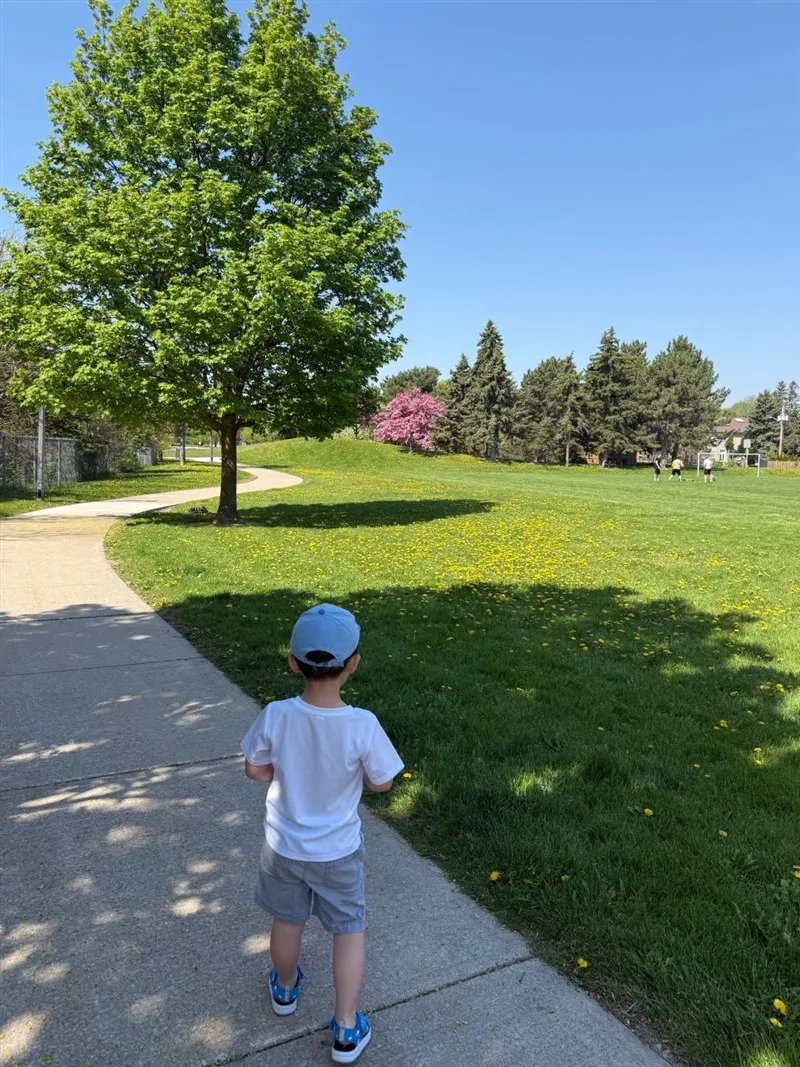
A walk in the park with our son.
The Hardest Day
There was one day that stands out. Our son was unwell, and at the same time I was not feeling well myself. I felt like I had nothing left to give, and on top of that, I felt real guilt that I could not give him the attention he needed that day. That combination, being run down myself and feeling like I was failing him, was the low point of the whole stretch.
Running on that little sleep for weeks caught up with me physically. In the early part of this period especially, I found it hard to concentrate while studying, simply because I was so tired.
The Night I Wanted to Quit
More than once, I asked myself: do we really need to put ourselves through this to move to Australia? The whole reason we were doing any of it was to give our son a better environment to grow up in. But there were nights when I could not reconcile that goal with how little time and attention I was actually giving him in the meantime. It felt contradictory, and that feeling was harder to sit with than the tiredness itself.
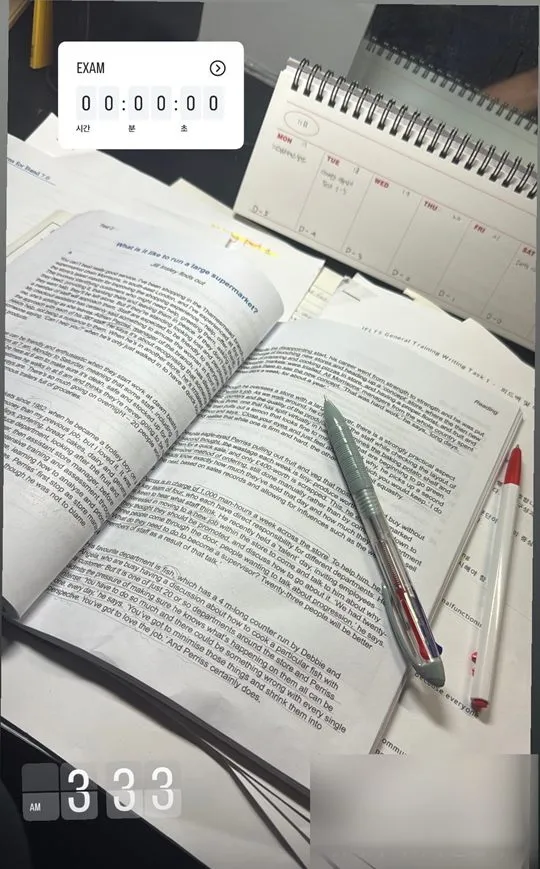
My desk at 3:33 AM, with a planner counting down to the exam.
Was It Worth It?
Looking back now, yes. I think we did what was genuinely necessary for our situation, and I am proud of how hard we both worked. That does not mean I would tell someone to copy our approach exactly.
If I am honest about what I would change, it is this: I let myself feel anxious about doing everything at once, all the time, and that fed a real burnout at points. What actually helped, when I managed it, was drawing a clearer line between studying and resting; properly playing with our son when I was with him, instead of half-studying in my head at the same time, and properly focusing when it was time to study. Trying to hold both at once, all the time, is what wore me down.
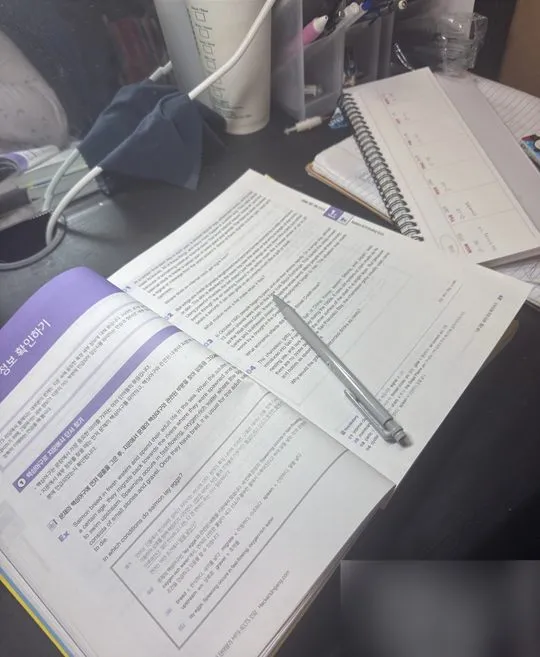
Another night at the desk, with a face mask, a coffee cup and my planner.
My Advice
Be deliberate about switching off. When you are with your child, be with your child. When you are studying, study. Trying to do both at once, out of guilt or urgency, tends to make you worse at each of them and leaves you more tired than either would on its own. Trade off with your partner if you can, so that neither of you is holding everything alone. And if you hit a night where you want to quit entirely, know that it is a normal part of this kind of stretch, not a sign you are doing it wrong. Looking back, I can say it does pass, and it can be worth it.
I do not think there is a shortcut around the tiredness itself. What made the difference for us was less about squeezing in more hours and more about how clearly we split the day: whose turn it was to study, whose turn it was to be present with our son, and not blurring the two. When we blurred them, out of guilt or a feeling that we should always be doing more, that is when things got worse rather than better.
A Few Things That Helped Us
- A clear handover each evening. We knew, without discussing it every night, whose turn it was to look after our son and whose turn it was to study.
- Protecting the time we did have with him. Even a short stretch of actually being present, rather than half-distracted, felt better than a longer stretch spent half-studying and half-parenting at the same time.
- Not comparing our pace to anyone else’s. We were both studying, both working, and raising a young child at the same time. That is simply a heavier load than many people carry while preparing for an English test, and it was never going to look like anyone else’s timeline.
- Reminding each other why we were doing it. On the hardest nights, it helped to say the goal out loud again, rather than only feeling the exhaustion.
- Accepting that burnout would happen sometimes, rather than treating a bad week as proof that we were failing. It passed, every time.
Where to Go Next
Read about the tests themselves in IELTS vs PTE for partner points, and see how this period fit into the wider application in our month-by-month timeline.
This is our own experience, not advice on study techniques, parenting or health. If you are exhausted and struggling, please talk to your doctor or someone you trust.