The 491 Visa Documents I Actually Had to Gather (A Real Checklist, Not a Government List)
When I first looked at the official document checklist for the 491 visa, it felt overwhelming: a wall of category names with no explanation of what they mean in practice, how much each one costs, or how long it takes. So I am writing down what a 491 application actually needs, what it costs, and the order that made sense for us. My husband is the primary applicant and works in construction, and I am the partner. We applied from Canada, where we live. I hope it is less of a mystery for you than it was for us.
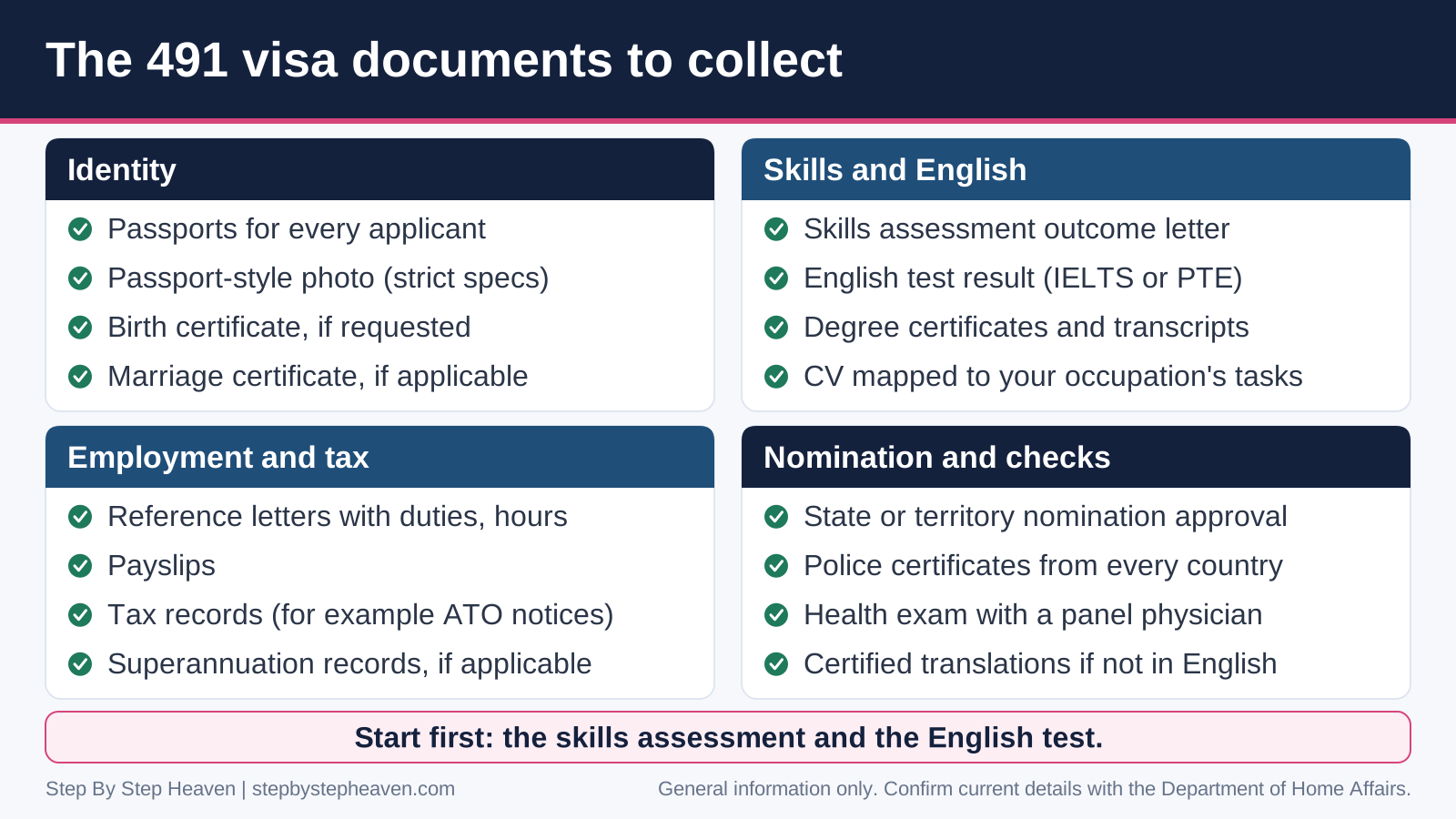
Before You Start: Three Things That Can Take the Longest
Everything else can be gathered in days or weeks. These three can take months, so start them first, even if, as with our skills assessment, one of them turns out to be quick.
1. Skills assessment. This is not optional, and the timing can vary hugely. You apply to the assessing authority for your specific occupation. Which body that is depends on your nominated occupation, and each has its own process and fee. For my husband’s trade, the authority was Trades Recognition Australia (TRA). We lodged on 28 January and TRA approved it on 5 February, only eight days later, which was much faster than I had feared. Other occupations and authorities take far longer, so check the current processing estimate on your assessing body’s own site rather than assuming.
2. English test results. PTE Academic, IELTS or another accepted test. Book early. Test dates fill up, and if your score does not hit the level you need the first time, you will need time and money to retake it. In my case (I was the partner and needed Competent English for our partner points), it took three tests (one IELTS and two PTE sittings, a little over CAD 300 each), and I passed on 10 March. I tell that story in my English score post.
3. Police certificates from overseas. This one caught us most. I am originally from Japan and have lived in Canada for 13 years, so I needed a certificate from each. The Canadian one (RCMP) was the easy one: I applied on 3 April and it arrived by post on 17 April, about two weeks later. The Japanese one took about ten weeks: I applied on 10 February and finally collected it in person at the Japanese consulate on 20 April. Nothing about the Australian process can shorten that, and it is out of your hands once you have applied. If you have lived in more than one country, work out which certificates you need and apply to the slowest one first. Documents issued in another language also need a certified English translation, so build that into the timeline.
How Much Does the 491 Actually Cost?
Nobody told us this adds up faster than expected, so here is the rough breakdown. The visa charges are the Department of Home Affairs figures in force from 1 July 2026, and they increase most years, so confirm them before you lodge. Everything else is a typical range, so check each provider before you pay:
- Main visa application charge: AUD 6,140 for the primary applicant
- Each additional applicant (18+): AUD 3,070
- Each additional applicant (under 18): AUD 1,535
- Skills assessment: roughly AUD 500 to 1,500 depending on your occupation’s assessing authority (VETASSESS lists AUD 1,146 excluding GST for a standard professional assessment)
- English test: about AUD 490 for IELTS in Australia. PTE Academic is in a similar range, though prices vary by country. Where I live, each PTE sitting cost a little over CAD 300
- State nomination application: free in some states, up to roughly AUD 500 in others
- Police clearance certificates: AUD 56 for an Australian federal police certificate (AUD 113 with fingerprints); other countries vary
- Health examination: roughly AUD 350 to 700 per person depending on the tests required
- Document translations: varies, charged per document
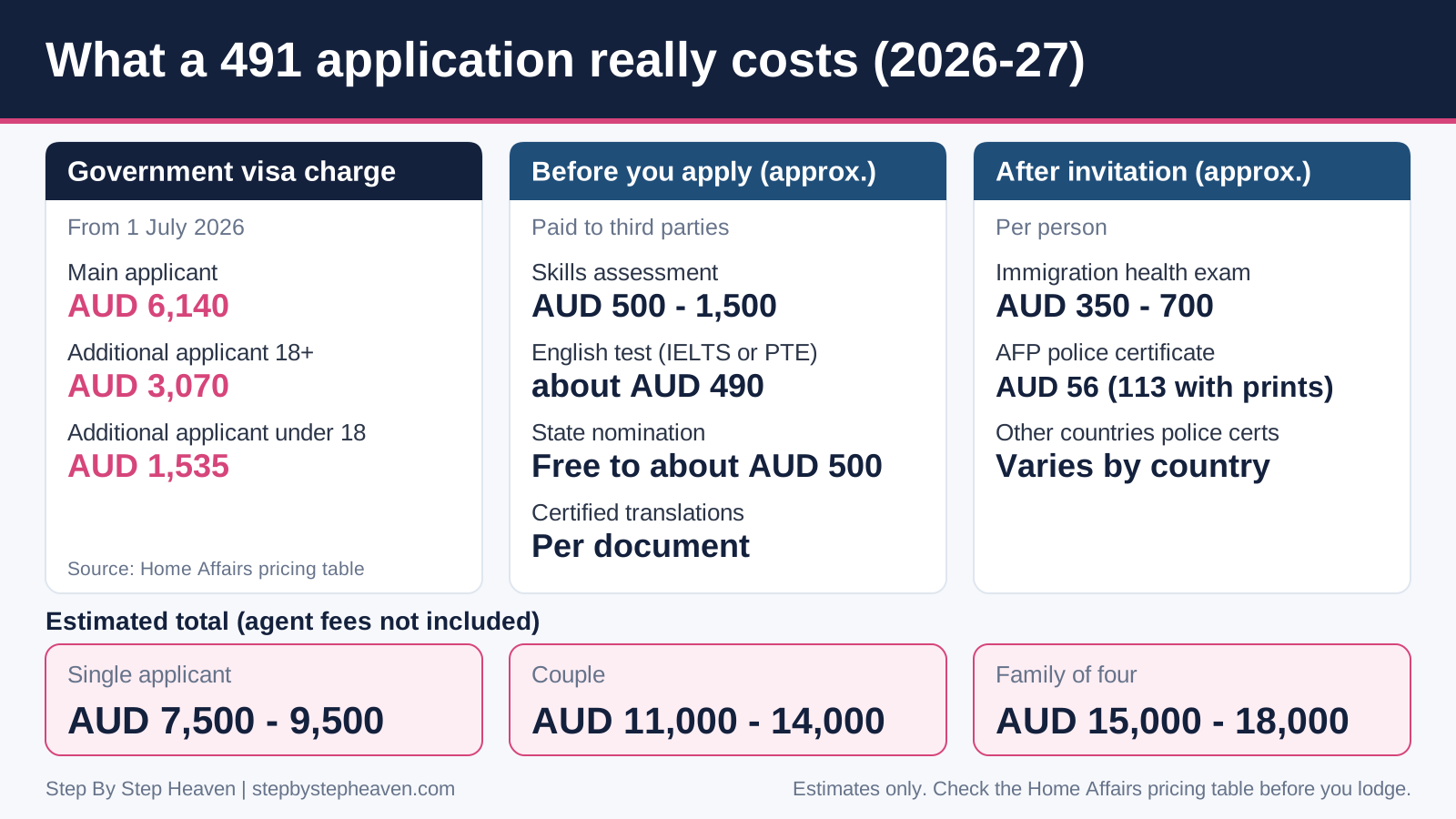
For a single applicant, budget somewhere in the AUD 7,500 to 9,500 range once every step is included. A couple should plan on roughly AUD 11,000 to 14,000 and a family of four on AUD 15,000 to 18,000, before any migration agent fees. And if you retake an English test, add that to the total. Two extra tests at CAD 300 or more each is real money.
How Long Does It Actually Take?
This is the part that tested our patience the most. The EOI stage requires a minimum of 65 points just to submit, but for many occupations invitations have been landing at 85 to 95 or more, so scoring right at the minimum can mean a long wait or no invitation at all. Once invited, you have 60 days to lodge your full visa application. After lodgement, the Department’s processing-time guide shows a very wide spread, from a few months for the quickest decisions to well over a year for the slowest, depending on the completeness of your application and how busy your occupation category is. This is not a quick visa by any measure, and planning your finances and living situation around a long wait is part of the process.
The Core Document List
Once your skills assessment and English test are underway or done, here is what else goes into the application folder:
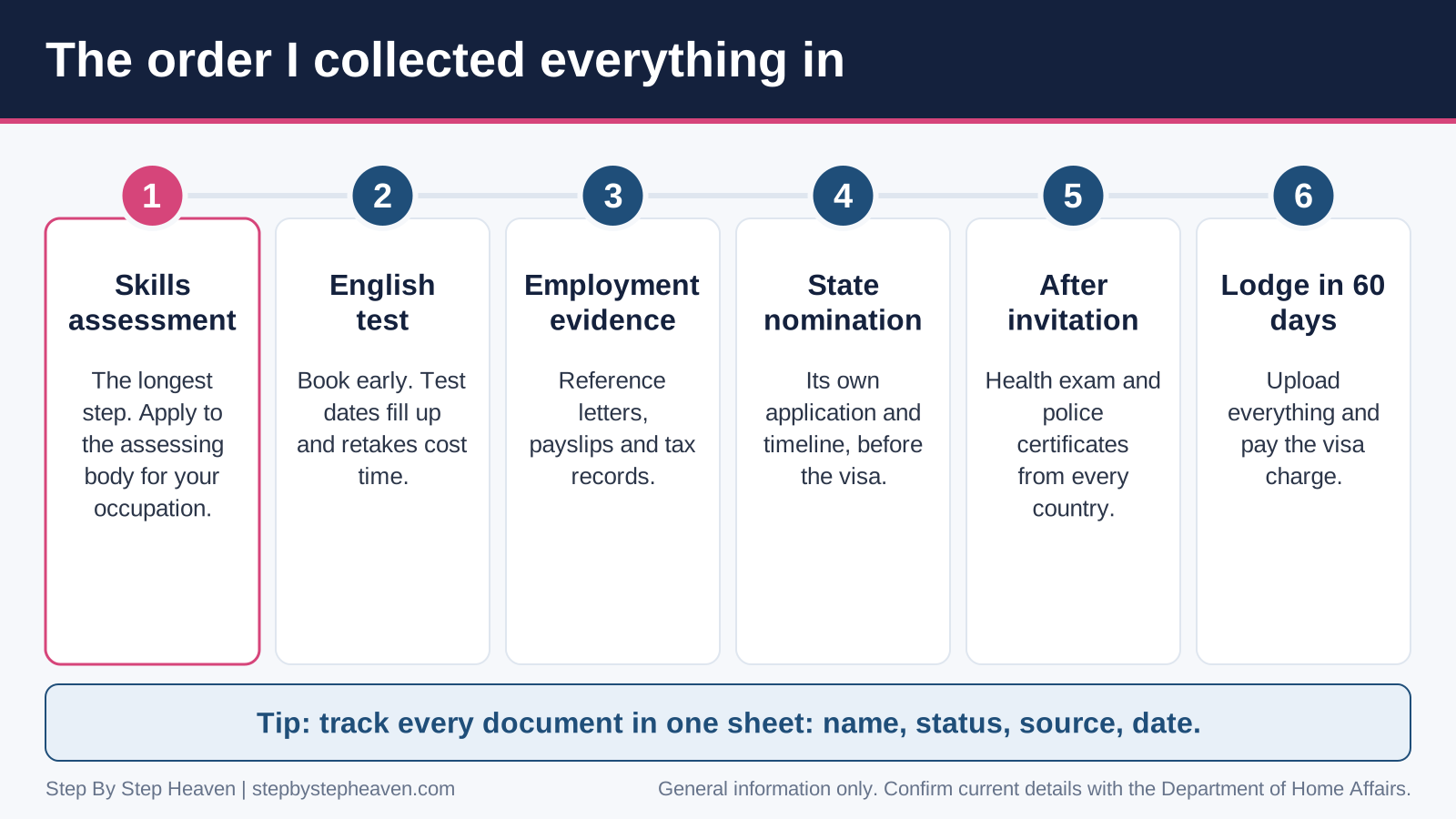
- Passport: a clear scan of the photo page, valid well beyond your expected visa processing time
- Passport-style photo: meeting the specific size and background requirements (do not reuse an old one; the specifications are strict)
- Birth certificate: sometimes needed alongside your passport, depending on your case
- Skills assessment result letter: the official outcome document from the first step above
- English test result: the official score report, sent or verified directly from the testing body when required
- Resume or CV in the required format: not your everyday resume; it needs to map your work history to the dates and duties relevant to your nominated occupation
- Employment reference letters: for each job you are claiming points for, on official letterhead, stating your role, duties, dates and hours per week
- Payslips and tax records: supporting evidence that the jobs on your reference letters happened as described
- Educational qualifications: degree certificates and academic transcripts, sometimes requiring certified translation if not issued in English
- State or territory nomination documents: since the 491 requires nomination, each state runs its own separate application with its own document list, before you touch the federal visa application
- Police clearance certificates: from every country you have lived in for a certain cumulative period (the exact threshold differs, so check for each country)
- Health examination: arranged through a panel physician once your application is underway, not something you can do in advance
What Surprised Us
Overseas paperwork sets the schedule. Everything else we did could be paced to our own energy. The Japanese police certificate could not. Once applied, all you can do is wait, so we planned everything else around it. For us, the sequence was: nomination about 10 April, everything filled in on the portal by 21 April and lodged on 11 May. Health examinations came after lodging. Our son and I had ours on 12 May, and my husband had his on 21 May. The full dates are in my timeline.
Certified translations are their own project. If any document is not originally in English, it needs a certified translation, and not every translator qualifies for immigration purposes. Confirm your translator is accepted before paying for anything.
Reference letters are easy to get wrong. A letter that just says “worked here, was a good employee” is not enough. It needs specific dates, duties that match your nominated occupation’s task list, and hours per week. If your employer is not used to writing these, hand them a template and be patient.
State nomination has its own timeline, separate from the visa. It is essentially a mini-application, with its own criteria, priority occupation lists and processing time, and you cannot lodge the visa application until it is approved. See how to choose a state.
Speed matters when rounds are running. Invitation rounds for my husband’s occupation were moving quickly, so being late with any one document could have cost us the round. That is why we tackled the slowest items first.
A Simple Way to Track It
Keep one spreadsheet with four columns: document name, status (not started, in progress, done), where it comes from, and date obtained. It sounds basic, but with this many moving pieces, especially long-lead ones like the skills assessment, police certificates and state nomination, having one place to see what is actually holding things up makes a real difference to your sanity.
The Bottom Line
The official checklist tells you what categories exist. What it does not tell you is which ones take the longest, which ones are easy to get wrong, which ones cost the most, and which ones depend on others being finished first. If you are just starting: get your skills assessment, English test and overseas police certificates moving today, budget realistically for the full cost, and expect a months-long process rather than a weeks-long one.
This reflects my own experience preparing a 491 visa application and is not immigration advice. Fees, points and processing times change and vary by individual case, so always confirm current figures on the Department of Home Affairs website or with a registered migration agent before relying on them.