How We Chose a Migration Agent for Our 491 Visa
Almost every post on this blog mentions “our migration agent” in passing. I have never explained how we ended up with one, what we handed over, what I checked first, or what was hard about the arrangement. This post fills that gap. Choosing an agent was one of the most stressful decisions of the whole 491 process, and I made it from another country, with no one to ask in person.
I am not a registered migration agent, and nothing here is advice. Fees and rules change, and every case is different. I am deliberately not naming our agent or linking to any agency. Neither I nor the person who recommended them received any referral fee or payment of any kind, and I am not being paid for this post. It is simply how it went for us, including the parts that were not smooth.
Where It Started: A Step That Would Not Move
We did not begin by looking for an agent. We began by trying to do the first step ourselves.
Because we were applying from outside Australia, my husband needed Recognition of Prior Learning (RPL) before we could even apply for his skills assessment. I started researching that in October and November, and I assumed it would be a matter of finding a provider and paying for it. It was not.
- Prices were all over the place. The same kind of service could cost very different amounts depending on who I asked.
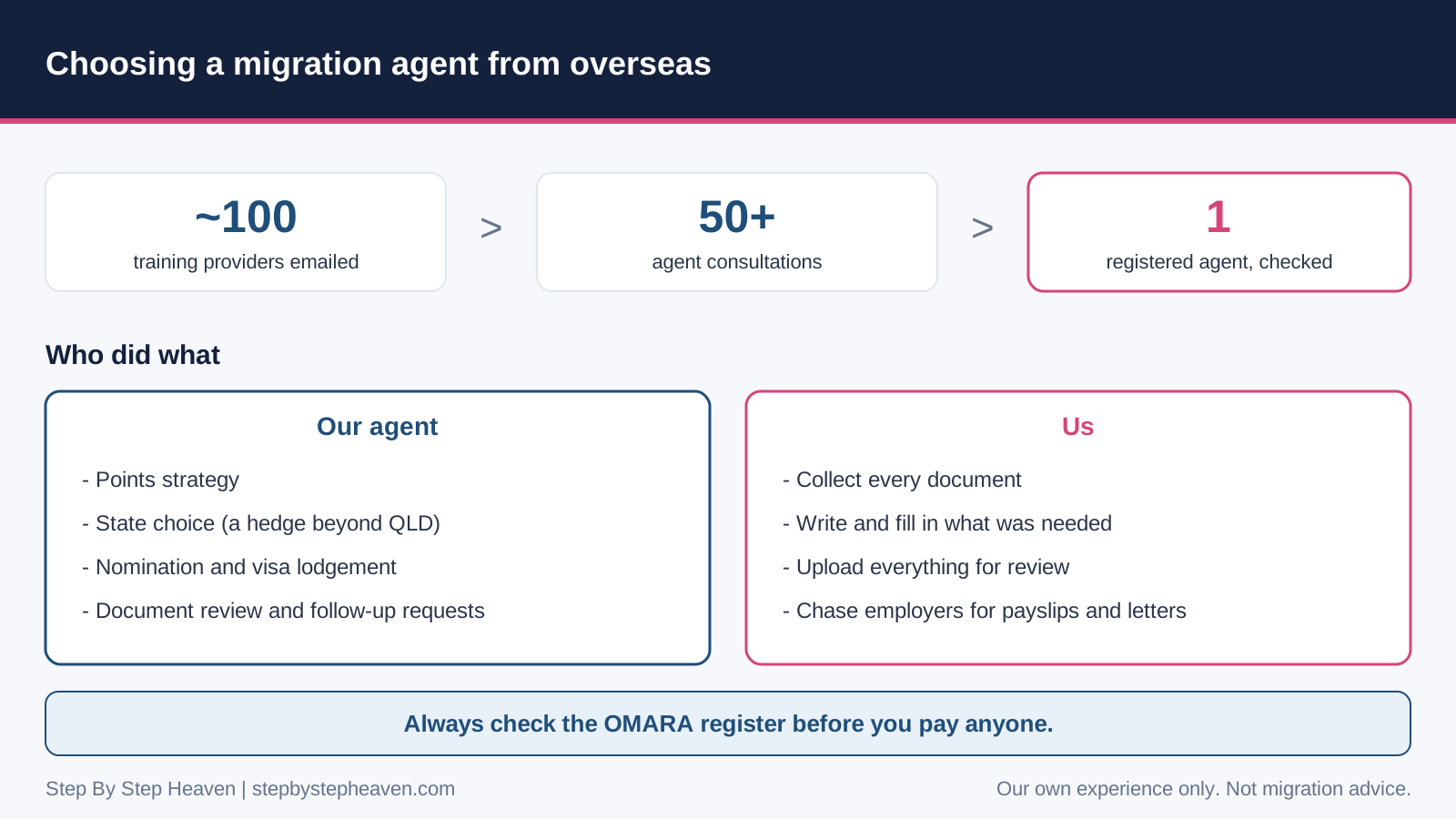
- Many providers could not help us. I emailed roughly 100 training organisations. A large number told me they do not offer RPL to students based overseas at all.
- Some were too slow or too expensive, and some I simply could not trust.
- Verifying a business from abroad is hard. Almost everything requires paying money up front. When you are in another country, it is difficult to tell whether a business is real, and sending a large payment to something you cannot verify is a frightening thing to do.
This was the very first step of the entire journey, and I was already stuck. I thought: if I am blocked here, the rest of this process will be much worse. That was when I decided we needed someone inside Australia who understood the system and could act for us.
The Provider That Did Not Check Out
One company, among the many I talked to, said it could do the RPL for us. They looked at my husband’s experience and said they would go ahead. Something about it did not feel right, and the fee was not small. Because we were in Canada, I knew that if we sent money and it went wrong, it would be very hard to get back.
So I checked. The company had given me an ABN, and I looked it up on the government’s ABN Lookup, which is free and lets you check whether an ABN is active or cancelled. At the time, that ABN was not active. On top of that, the payment details they gave me were for an individual, not for a company. Those two things together did not add up, and I stopped the process there. We did not send them any money.
That is only what I saw on one day, and I am not saying anything about any particular business. Records can be different from one search to the next, so check for yourself.
I also searched for the company on Google and read every review I could find. We could not walk into an office and talk to someone, so I treated each step as something I had to prove to myself, one by one. That was slow, but it is what made me comfortable with the choices we did make.
Why I Decided an Agent Was Worth It
My reasoning came down to three things:
- Current information. Rules, lists and requirements change. I wanted someone who followed those changes professionally, rather than me piecing them together from old forum posts.
- The right path for our situation. A good agent can tell you which occupation, pathway and documents fit your actual circumstances instead of the general ones.
- Time. I was working and raising a young child. Cutting out wrong turns was worth a lot.
How We Found One
I joined an online community for people from our home country and started asking questions, a lot of them. After a while, another member sent me a private message. They said they had been in a similar situation and had received their visa through a particular agent.
I want to be honest about this: it could have been an advertisement. I did not treat it as proof of anything. Instead, I looked into the agent myself, and I describe exactly what I checked below. What I found was a registered migration agency with a licensed agent, and I felt more comfortable once I had confirmed that independently. There were also reviews from other people in the same community.
A few things made me comfortable choosing this agent:
- They were from the same country as us, and could talk to us in our own language. That made everything easier to ask and to understand.
- They were friendly and patient with our questions.
- It was a team, not one person. Several people worked on our file together.
- Plenty of people from the same community had used them. I treated that as a reason to look closer, not as proof.
We Talked to at Least 50 Agents
Before choosing, I spoke with at least 50 different agents and agencies. When I compared them, price turned out to be less of a deciding factor than I expected. Apart from a few that were noticeably more expensive, the fees were broadly similar. What separated them was experience, how responsive they were, how much real information they gave in the first conversation, and what other applicants said about them afterwards.
The Red Flags I Saw
Some of the other places I spoke to made me uneasy. These were the warning signs, in my own experience:
- Guaranteed results. Some said they could guarantee an outcome. Nobody can promise that.
- A promised speed. Some said a result would come in a matter of days.
- No registration number. An RPL provider would not give me its registered training organisation number. A genuine provider should be listed on the national register at training.gov.au, which shows the organisation’s code, status and ABN.
- An ABN that would not check out, and a payment request to a person instead of a company, as in the story above.
In contrast, the agent we chose told us plainly that this is not a quick process and that we should allow plenty of time. I took that as a good sign, though not a guarantee.
How to Check That an Agent Is Legitimate
Because I was doing all of this from overseas, this was a real worry for me, so here is what I wish I had known from the start.
In Australia, only registered migration agents (and a small number of exempt people) are allowed to give paid immigration assistance. The Office of the Migration Agents Registration Authority, known as the OMARA, runs a public register, and its website has a “Search for a registered agent” page and a “Choosing a registered agent” guide. I checked this on the OMARA website on 3 October 2026.
For our agent, I looked at three things: their registration number, the body they were registered with, and their disciplinary record. The site publishes the disciplinary decisions it makes against agents, which is worth a look.
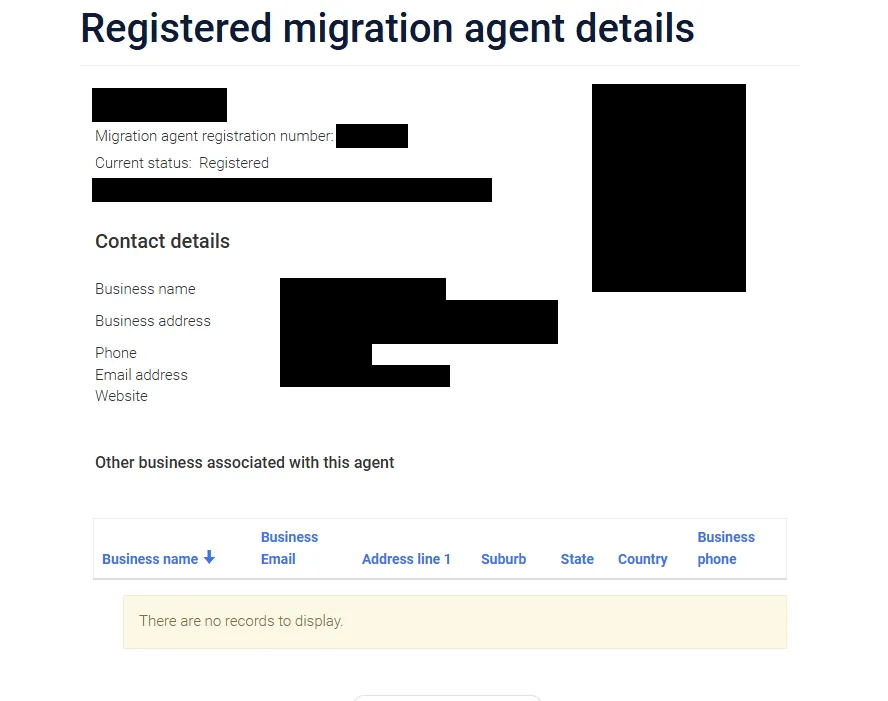
The agent’s page on the OMARA register, with the name, photo, registration number and all contact details covered. The status reads “Registered”.
If an agent will not tell you their registration details, or you cannot find them on the register, treat that as a serious warning sign.
How It Started: Our First Weeks
Here is the order of events, with real dates.
| Date | What happened |
|---|---|
| December 2025 | First enquiries. It was the holiday period, so very little moved |
| 28 December | I first contacted our agent |
| 11 January | We sent my husband’s passport, his CV and a self-employment statement of service |
| 12 January | A paid consultation, about 20 to 30 minutes, to check whether we were eligible |
| 13 January | We paid the RPL service fee |
The consultation cost 100,000 Korean won, which I paid in Korean currency. It told us whether the pathway was realistic before we committed to anything larger, and the agent told us it looked possible. As I describe in our timeline, most of Australia effectively shuts down in late December until mid-January, so nothing really started until the new year.
Who Did What
Dividing the work clearly was one of the best things about our arrangement. Here is how it split.
Our agent handled:
- RPL. Because they were based in Australia, they already knew training organisations that did RPL. I could not have found that from here. They recommended an organisation, and that is the one we went with. I am not naming it, and I will not write about RPL providers.
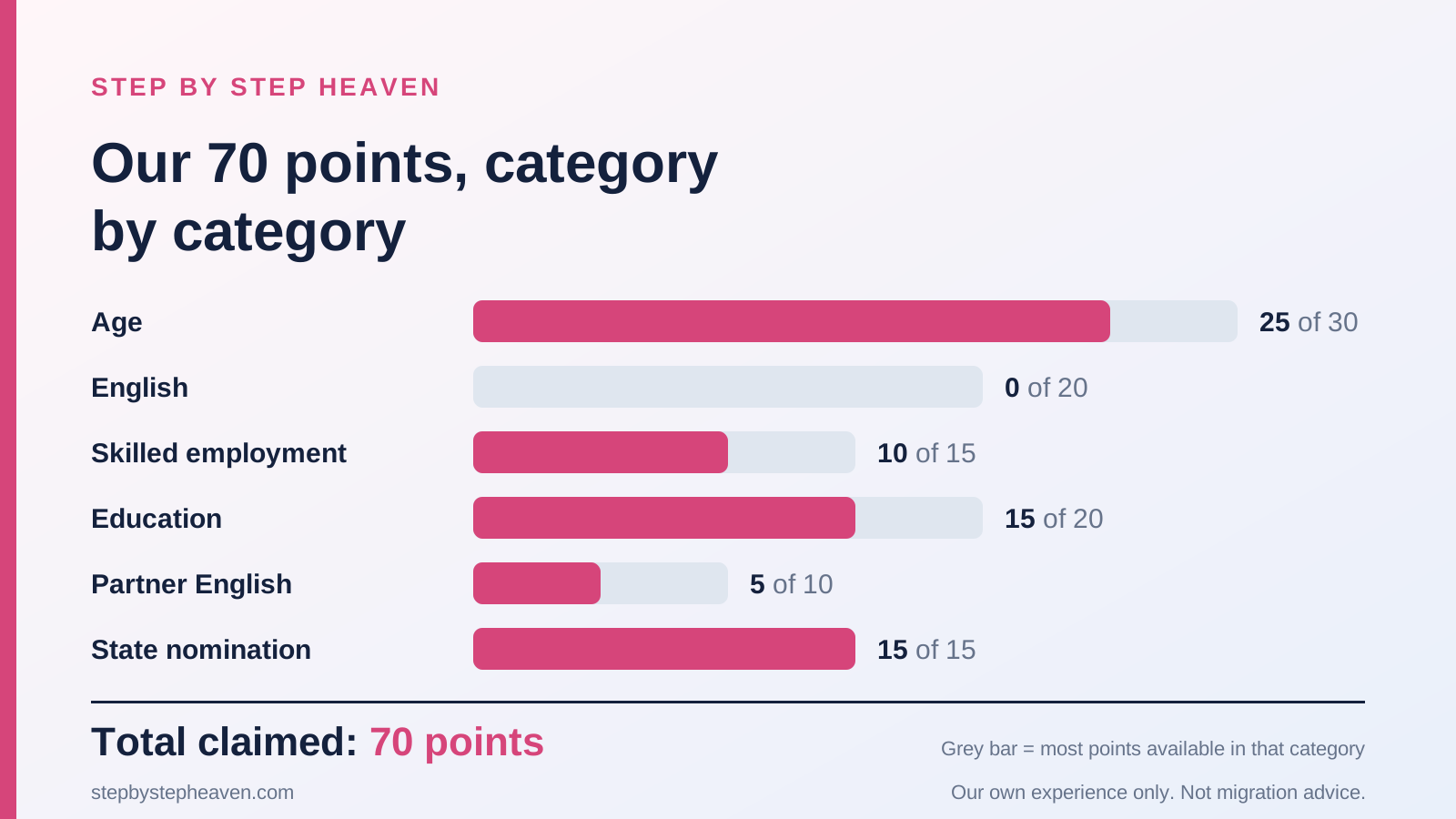
- Points strategy. How to approach our points, including my partner English requirement.
- State choice. We already wanted Queensland from the start, but our agent suggested adding other states as a hedge, since we could not know how things would turn out. I wrote about that in our Queensland nomination story.
- Nomination and visa lodgement. Our agent submitted both for us.
- Document review. We sent over everything we prepared, and the agent checked it and asked for anything that was missing or weak.
We handled:
- Collecting every document. My husband is the primary applicant, so most of the evidence, like payslips, was about his work history, and we had to chase it ourselves.
- Writing and filling in what was needed.
- Uploading it all for our agent to review.
I think that division is natural, and I did not expect the agent to do it for us. You can see how it played out in our skills assessment story, where gathering years of payslips and references was entirely on us, even though our agent told us exactly what was needed and lodged the application.
What Was Hard
This is the part that most agent posts leave out.
- The time difference. Canada and Australia are many hours apart. I worked during the day and prepared documents after work, then sent them, by which time it was a very different part of the day for our agent. That was tiring.
- Slower replies at times. Our agent made a real effort to stay in touch, and updates mostly came without us having to chase. But if they were in meetings, replies could be late, and the time difference made that gap longer for us. I understood why. It was still a frustration.
- Everything still came from us. If the agent said a document was needed, we had to write it, find it or chase it. I do not count that against them, but it is more work than some people expect when they hire an agent.
What It Cost
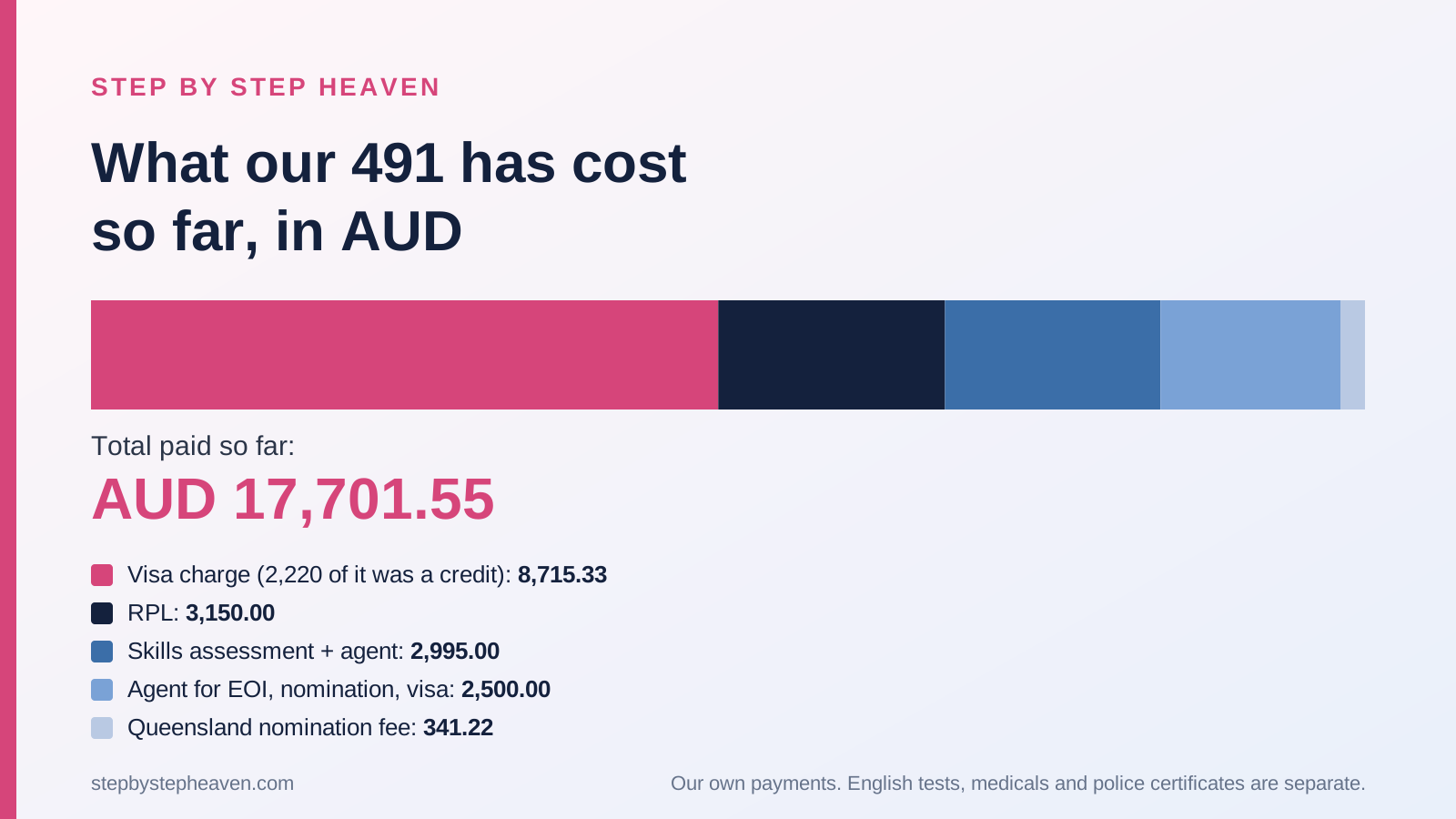
I would rather not share our agent’s fees, and I think that is reasonable. What I can say is that we paid in stages rather than all at once, and that the structure felt fair to us. The one number I will give is the initial consultation, 100,000 Korean won. Since fees differ so much between agents and over time, ask for a clear written breakdown of what is included before you commit.
What the Agent Changed for Us
The biggest thing was time. Working alone, I had spent months searching for information and still did not know which documents would be needed. Our agent already knew, and told us from the start what to prepare, which shortened the process a lot. They also knew things I could not have found from abroad, like which RPL organisations existed.
I will not claim more than that. I cannot say what would have happened if we had done it ourselves, and I do not want to overstate it.
Would We Use an Agent Again?
For us, yes, mainly because of the time it saved. But I would do the same checks again before paying anyone, and I would plan for the time difference.
My Advice
- Check everything yourself, before you pay. For an agent, use the OMARA register. For a training provider, check the registration number on training.gov.au and the ABN on ABN Lookup, and ask yourself whether the name you are paying matches the business you checked.
- Be wary of guarantees and promised speeds. In my experience, the places that promised results were the ones I trusted least.
- Talk to several agents before deciding. Do not treat the first one as the only option.
- Do not pick on price alone. Experience, honesty about timing and clear communication mattered more to us.
- Plan for the time zone. If you are in a different country, agree how and when you will communicate.
- Be ready to do the document work yourself. Your agent will guide you, but the evidence has to come from you.
Questions to Settle Before You Hire an Agent
- Search the OMARA register and confirm the agent is currently registered
- Ask for a written breakdown of what the fee covers and when it is paid
- Ask what happens if something takes longer than expected
- Ask who will actually work on your file, and how you will communicate
- Agree who collects, who reviews and who lodges, before you start
- Keep every document in one organised folder
Where to Go Next
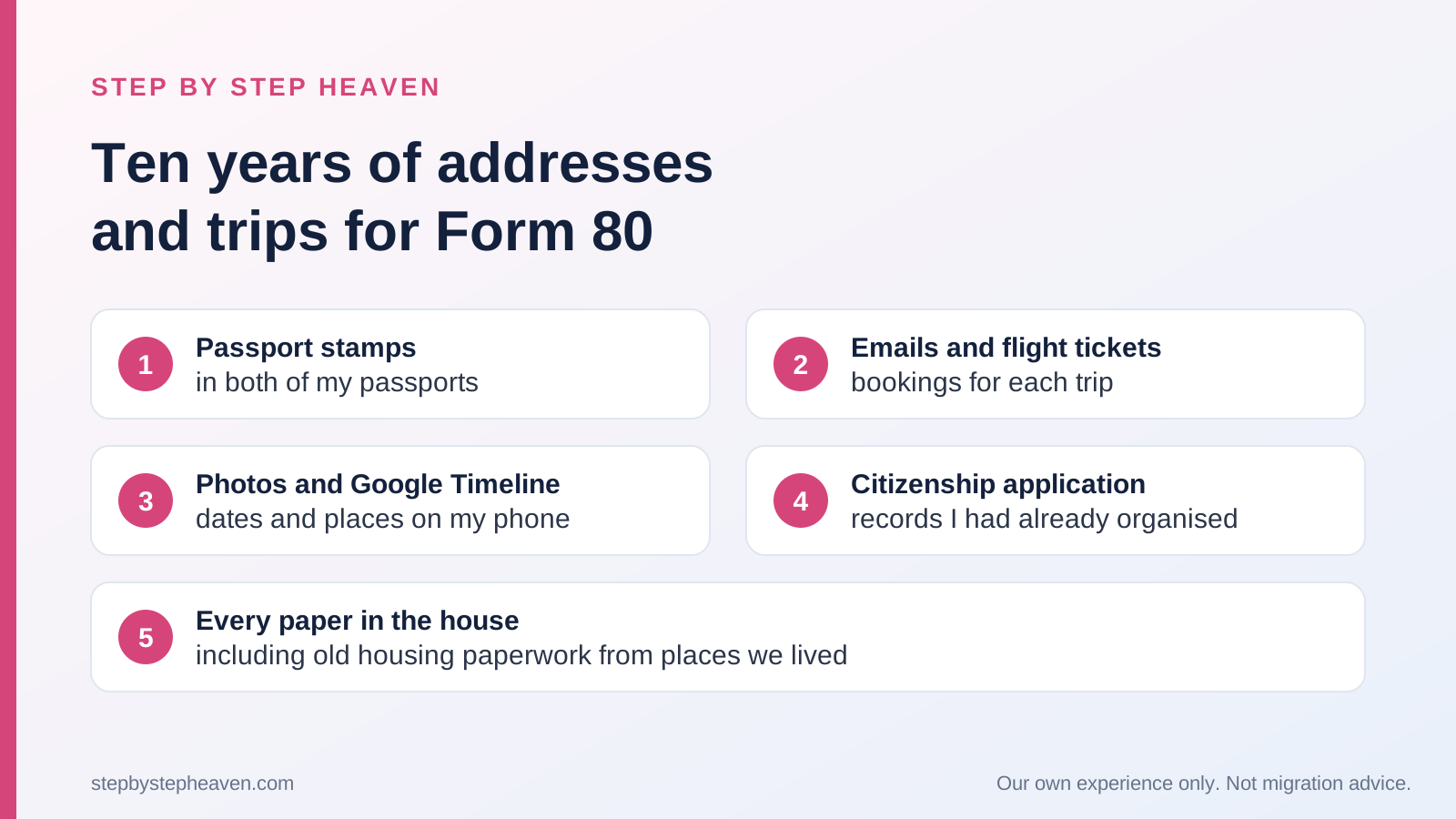
If you want to see how this played out in practice, read our month-by-month timeline and the documents we actually had to gather.
This is our own experience and not migration advice. Always check that anyone giving you paid immigration assistance is a registered migration agent on the official OMARA register, and confirm current rules with the Department of Home Affairs.