Navigating the Diverse Visa Application Process in Australia
We started looking into Australian migration in December. My husband works in construction, I would be the partner on the application, and neither of us knew which visa category we even belonged to. Every forum thread and government page seemed to assume we already knew. If you are at that same starting point, this is the overview I wish I had been given, plus how our own path through it played out.
The Main Visa Categories
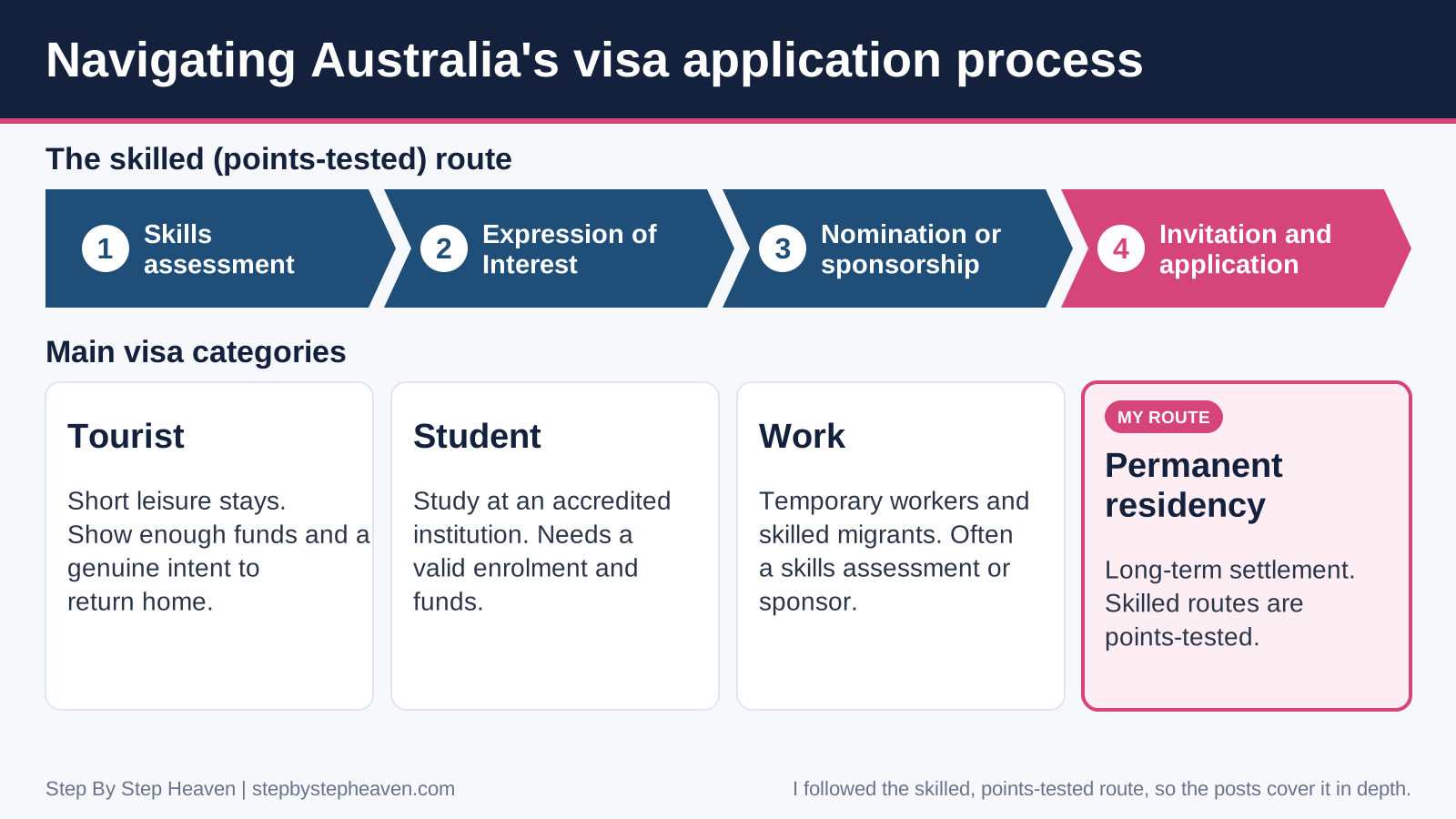
Australia offers several key visa categories for different travel and migration goals:
- Tourist visas are for short leisure trips. Applicants must show enough funds for their stay and a genuine intention to return home before the visa expires.
- Student visas let international students enrol at accredited Australian institutions. Typical requirements include a valid course enrolment (CoE), proof of funds for tuition and living costs, and English proficiency.
- Work visas cover temporary workers and skilled migrants in high-demand fields. Most streams need a recognised skills assessment and, in many cases, sponsorship from an approved Australian employer.
- Permanent residency (PR) is for skilled professionals, family members and humanitarian applicants who want to settle long term. Skilled routes are usually points-tested and involve skills assessments, English tests and health and character checks.
There are also family visas (partner, child, parent) that rest on relationship evidence rather than points, and they follow their own rules. We never went down that road, so I will not pretend to explain it in depth.
Why Skilled Migration Was Our Route
Our route was the skilled, points-tested one, because my husband’s occupation is in construction (drywall and plastering, a trade he has worked in for six to seven years in Canada) and, as far as I know, it is in demand in Australia. He is the primary applicant, and I am the partner. That distinction matters more than I expected. In the points test, the main applicant carries most of the score, but a partner can add points too, which I will explain in the posts on SkillSelect points and English scores.
Age was the other big factor. Age is one of the largest single categories in the points test, and points start dropping after the early thirties. We were not young applicants, which meant we were giving up points before we had even started. That pushed us toward every option that could add points back, and it is a big part of why we ended up looking closely at regional nomination. I compare the three main skilled subclasses in 189 vs 190 vs 491.
What the Skilled Pathway Looks Like in Practice
For the visas we looked at, the path runs in roughly this order:
- Skills assessment. An assessing authority checks that your qualifications and work history match your nominated occupation. Which authority depends on the occupation.
- English test. Points depend on your scores, and the partner can add points too if they meet the English requirement.
- Expression of Interest (EOI). You lodge an EOI through SkillSelect. It is a statement of interest, not a visa application, and it is ranked against others by points.
- State or territory nomination. For the regional 491, a state or territory nominates you. Each has its own criteria and application.
- Invitation and visa application. Once invited, you have 60 days to lodge the full application, with health checks, police certificates and supporting documents.
Each step feeds the next, and several of them have long lead times. Fees are their own topic. I break them down in the documents post.
The Part Nobody Warned Us About: Timing
We began researching in late November and December, and that turned out to matter. Christmas fell in the middle of it, and much of Australia effectively shuts down until mid-January. Anything that depended on an Australian office had to wait. We did not really get going until the middle of January, and from there it was a sprint: we submitted our EOI on 16 March and lodged the visa application on 11 May.
Living outside Australia, the slow parts were not the Australian ones. I am originally from Japan and have lived in Canada for 13 years, so I needed police certificates from both. The Canadian one took about two weeks. The Japanese one took about ten weeks. English tests are hard to schedule and expensive to retake too (I took three: one IELTS and two PTE, the PTE ones at a little over CAD 300 each). Timing was easily our biggest hidden cost, and I walk through the whole sequence, with dates, in my timeline.
The Challenges Nobody Fully Prepares You For
Working out the rules yourself is genuinely difficult. With many subclasses and frequently changing criteria, it took us longer than expected to work out the right pathway, even with a specific occupation in mind. If your situation is complicated, a registered migration agent (MARA) or immigration lawyer can save real time. We worked with a migration agent, and I am glad we did, though you still have to gather all of your own documents (nobody else can get your police certificates or pass your English test). Whether to hire one is a personal call that depends on your budget, your time and how complicated your case is.
Documents from other countries set your schedule. Police certificates, certified translations and official records from overseas often take longer than any form you fill in. Start those first.
Life keeps going while you prepare. I was working during the day and raising a child, so studying and paperwork happened in the gaps, often late at night. Build slack into your plan. You will need it.
Most refusals come down to preventable gaps. From what I have read and seen, most rejections trace back to incomplete evidence, incorrect forms or simply missing a baseline criterion that could have been checked in advance. I list the most common ones in 7 mistakes that get 491 applications rejected.
Where the System Seems to Be Heading
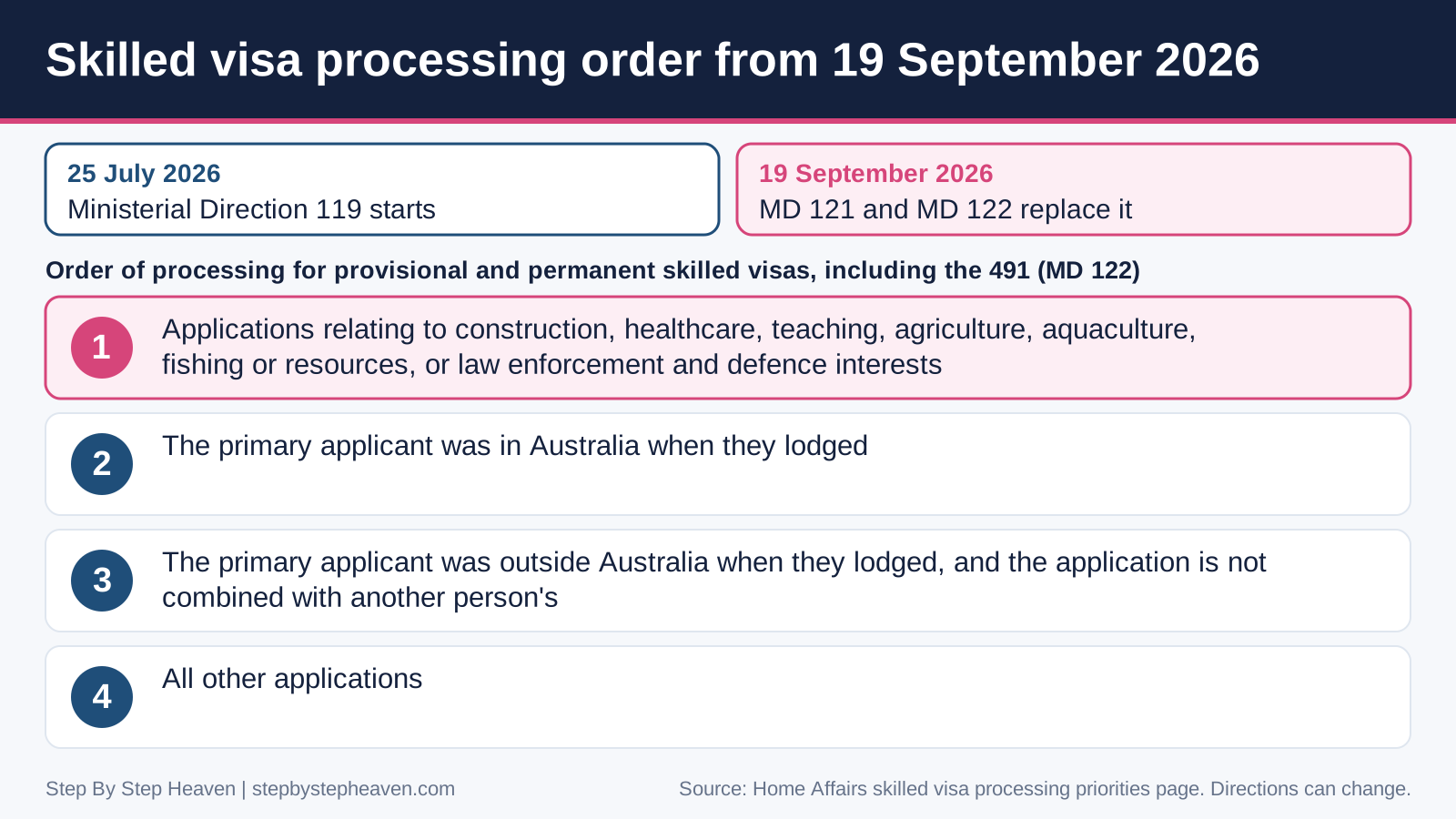
Migration settings shift fairly often. A few directions have stayed consistent enough to plan around: skilled migration is prioritising specialised talent in shortage sectors, points tests and processing priorities are being revisited, and regional pathways are becoming a central strategy rather than a backup. None of this is something an individual applicant controls, but staying aware of it helped us avoid being caught off guard mid-process.
The Bottom Line
You do not need to understand the whole Australian visa system to make progress. You need to know which category you are in, what the next step is, and which step will take the longest. For us, that meant skilled migration, the 491, and starting the slowest tasks first. If you are just beginning, work out your category first, then read about the step in front of you.
This reflects my own experience and research and is not immigration advice. Visa rules, fees and processing times change, so always confirm current details on the Department of Home Affairs website or with a registered migration agent.