Lodging Our 491 Visa Application: Three Weeks, Start to Finish
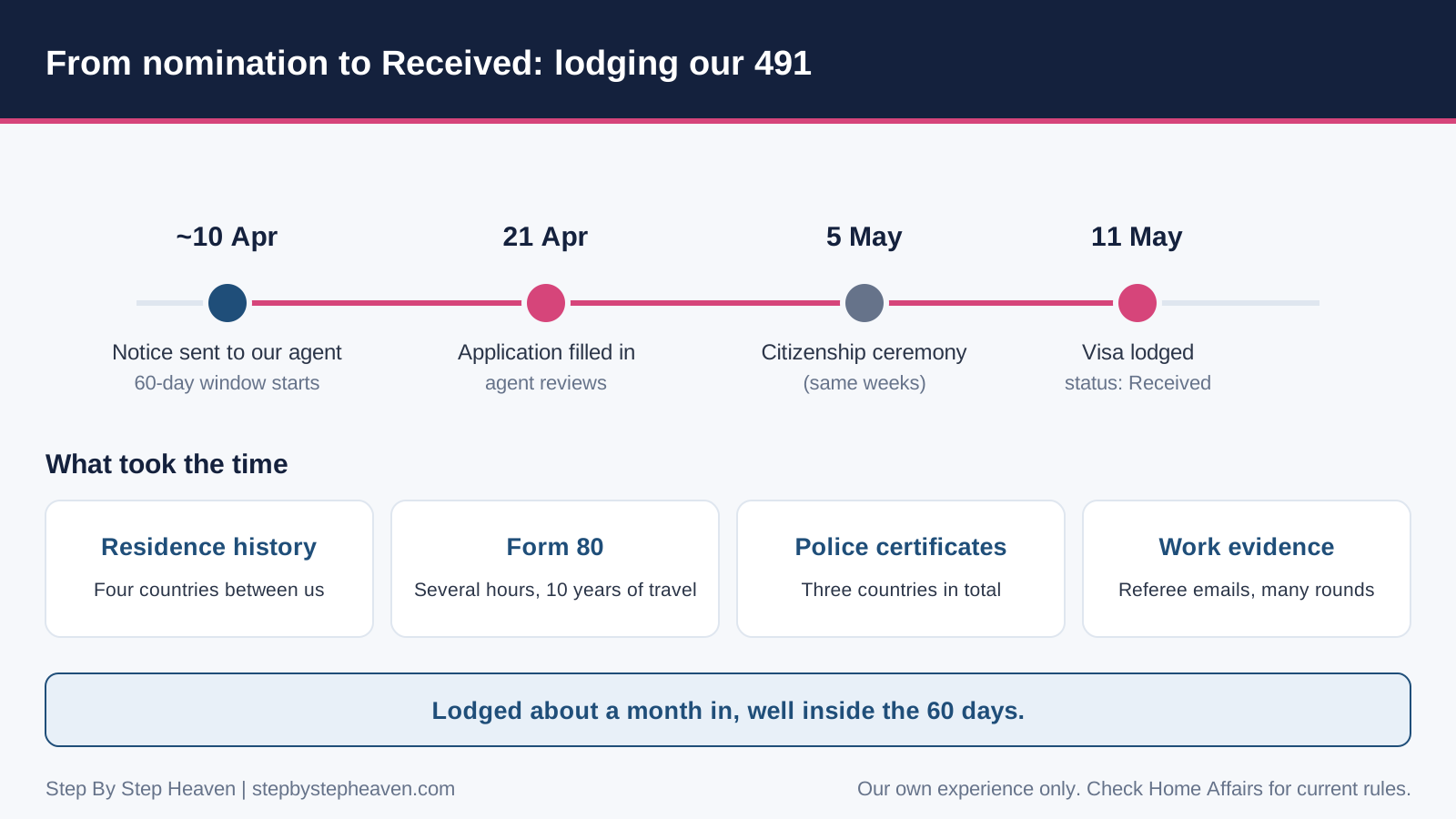
Most posts about the 491 stop at nomination, or jump straight to the waiting. The stretch in between, when you actually build and lodge the visa application, is where a lot of the real work happens. For us it ran from around 10 April, when the nomination came through, to 11 May, when the application was lodged. About a month, with three busy weeks in the middle.
I am not a migration agent, and this is only our own experience. The official rules change, so check the Department of Home Affairs for your own case. If you want the stage before this one, I wrote about it in our Queensland nomination story.
How We Found Out We Could Apply
The notice that we could apply for the visa went to our agent, not directly to us, around 10 April. The agent passed it on, along with the reminder that there is a 60-day limit. As I have said elsewhere, I am not certain that the nomination and the invitation arrived on exactly the same day, so please treat “around 10 April” as approximate.
The Home Affairs page for the subclass 491 says that you have 60 days from the date of your invitation to apply, and that you start by logging into SkillSelect, clicking “Apply for visa”, and continuing in ImmiAccount (checked 6 October 2026). We lodged on 11 May, roughly a month in, so we were well inside the window.
Two ImmiAccounts
My husband is the primary applicant, so our agent created the ImmiAccount in his name. I made a second ImmiAccount of my own, so that I could follow the progress of the application myself without having to ask. I would do that again. It meant I could check things whenever I wanted, instead of waiting for someone else to tell me.
Who Filled In What
On 21 April, we had entered the whole application ourselves, and our agent reviewed it. That is the same division of work I described in how we chose a migration agent: we do the gathering and typing, and the agent checks it and tells us what is missing or weak. I do not remember specific corrections the agent asked for, so I will not invent any.
What the Application Asks
The application covers a lot of ground: personal details, family members, passports, occupation and employment history, where you have lived, and health and character questions. Nothing in it was a surprise, but a couple of sections were much bigger than I expected.
The Slowest Part of the Form: Where We Had Lived
The residence history took us longer than anything else on the form. Between my husband and me, we have lived in four countries. Most of our adult years were in Canada, but there were also long stretches elsewhere, including Japan and Australia, and every period had to be accounted for.
The same history decides which police certificates you need. The Home Affairs page asks for an overseas police certificate from every country where you spent a total of 12 months or more in the last 10 years since you turned 16. For the two of us, that meant certificates from three countries. The Japanese one was the hardest to get, and I wrote about it in my Japanese police certificate post, with the faster Canadian one in the RCMP post.
Form 80: Several Hours and a Lot of Memory
Home Affairs asks for two character forms: Form 80, “Personal particulars for character assessment”, and Form 1221, “Additional personal particulars information”. Form 80 took me several hours.
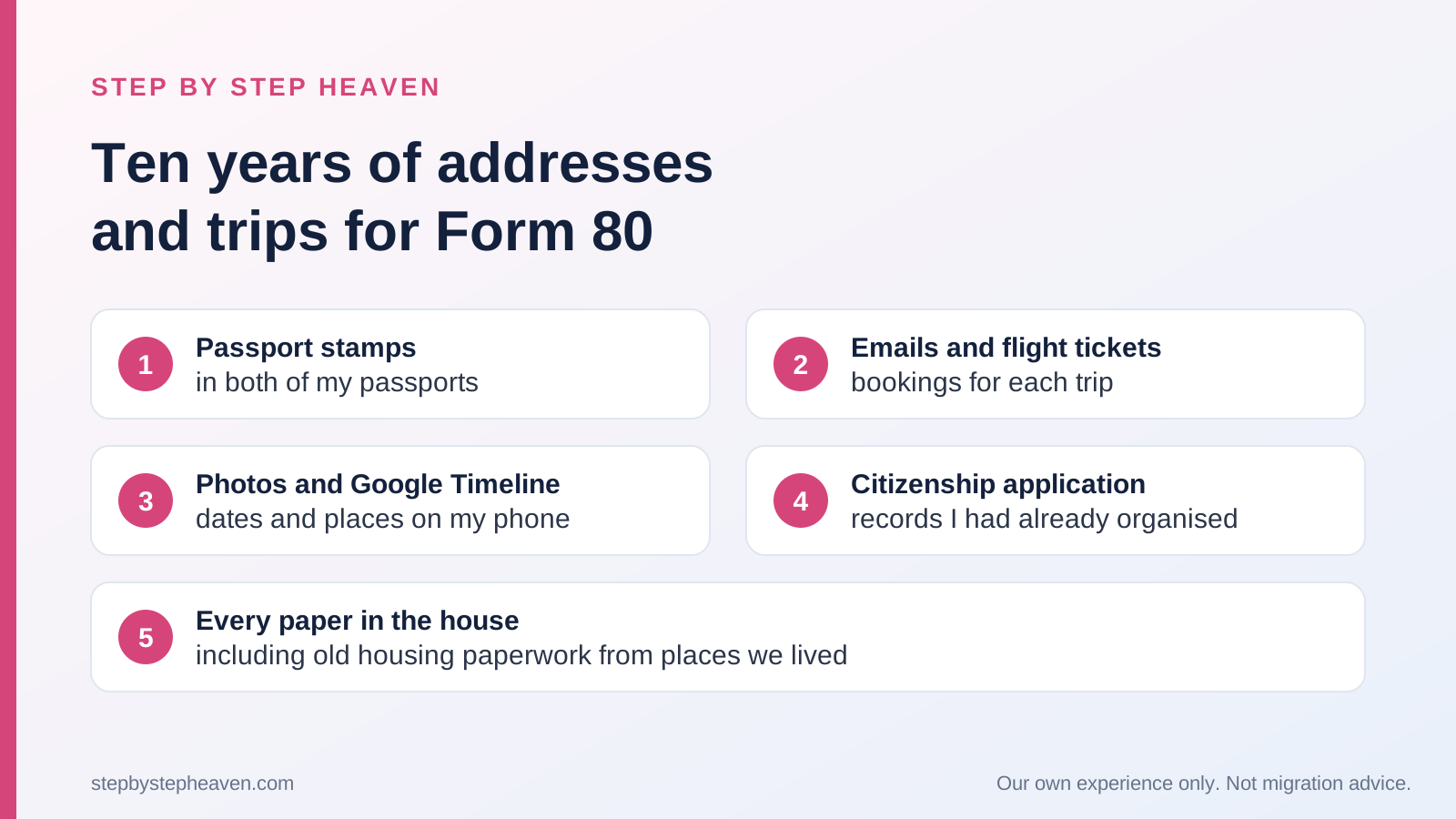
It asks for details that you do not carry around in your head: your addresses over the last ten years, and your overseas travel. Before our son was born, we travelled a lot, usually one to three trips a year, to visit family overseas and for holidays, including Mexico. Rebuilding every one of those trips from old records and photos was the hardest part. If you are about to apply, start a simple list of trips now, with dates, so that you are not reconstructing them under pressure. I wrote up how I rebuilt mine in how I rebuilt ten years of addresses and trips for Form 80.
Our Son’s Details
For our son, we needed his birth certificate and his passport. This was the easy part, because those documents were already in hand.
The Real Reason It Took Three Weeks
Between 21 April, when the form was filled in, and 11 May, when we lodged, what we were mostly doing was waiting for evidence about my husband’s work.
My husband is self-employed, so there is no single employer who can simply write one letter for him. We needed reference letters from the builders he has worked with, and we also needed evidence from companies he had worked for in the past, including documents confirming his work history. Each of these meant emails going back and forth, checking details, and waiting for replies. Those same few weeks also included my citizenship ceremony on 5 May, which I wrote about in becoming a Canadian citizen during the same period.
If I could pass on one thing about this stage, it is to start asking for work evidence long before you need it. The form, the scans and the typing can all be done in a few days, but a reply from someone else is out of your control.
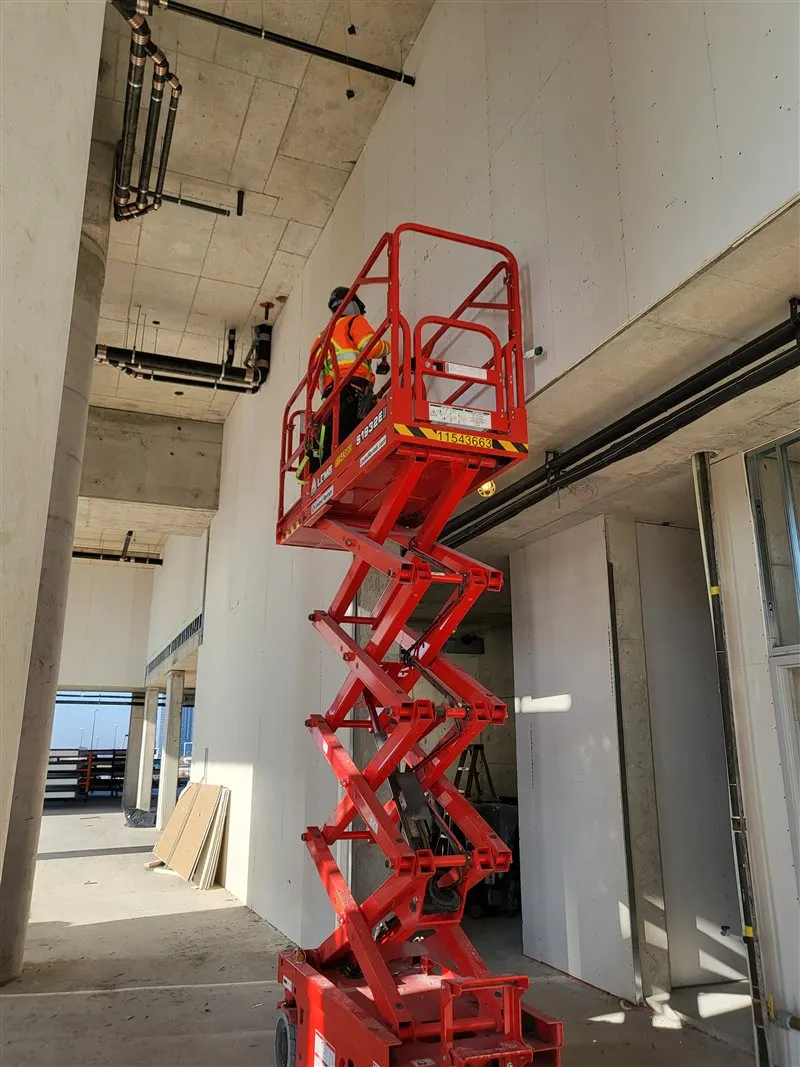
The kind of work our reference letters had to describe. A job-site photo from my husband’s phone (November 2023).
Uploading the Documents
I expected the upload to be where things went wrong, and it was not. We did not run into upload problems at all. Home Affairs gives some clear guidance for scans: photograph or scan every document, whether it is in English or not, in colour, make sure it is clear, and if a document has more than one page, save it as one file. We followed that, and it went smoothly.
What Happened at the End
There was no big moment. Once everything was in, the application was lodged on 11 May, and since then the status has simply said “Received”. I wrote about what that waiting feels like in our four-month waiting update.
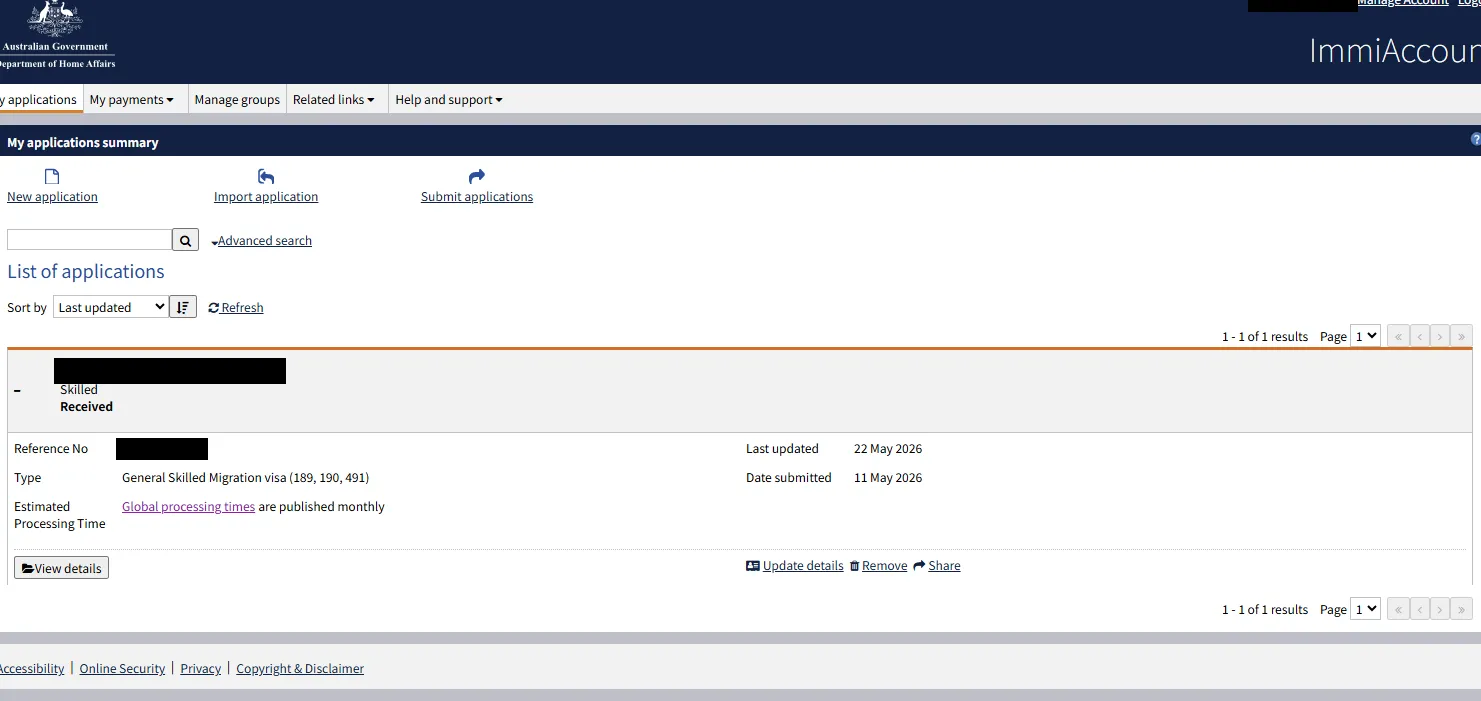
My ImmiAccount application list, with names, birth date and reference number covered. The status is “Received” and the date submitted is 11 May 2026.
Would We Do It Differently?
Honestly, the thing I keep coming back to is the agent. I do not think my husband and I could have lodged this quickly if we had done it ourselves. For me, using an agent was a way of buying time with money. Ours was careful and thorough, told us exactly which documents mattered, and checked everything before it was sent. If you can use a registered migration agent, I would, and I would check the register first, as I describe in the agent post.
Before You Start Your Own Application
- Know your 60-day deadline from the invitation, and write the date down
- Create your own ImmiAccount if you want to follow progress yourself
- List every address from the last 10 years, with dates, before you start
- List every overseas trip with dates before you sit down with Form 80
- Work out which countries you need police certificates for, and start the slowest one early
- Ask referees and past employers for letters well before you need them
- Scan documents in colour, clearly, and save multi-page documents as one file
- Have your agent, or someone careful, review everything before it is lodged
Where to Go Next
If you want to see how the weeks before and after this fit together, read our month-by-month timeline and the documents we actually had to gather.
This is our own experience and is not migration advice. The 60-day limit and document requirements come from the Department of Home Affairs page for the subclass 491 visa, last updated 16 July 2026 and checked on 6 October 2026. Rules change, so confirm current details with Home Affairs or a registered migration agent.